Showing posts with label identity. Show all posts
Wednesday, June 22, 2011
Wednesday, March 30, 2011
Why Do We Hurry to Wait?
While traveling a few weeks ago, I had ample opportunity to observe the art of waiting. Or rather, the art of not waiting. New Yorkers aren’t known for their patience—something that became painfully obvious when I got frustrated with the service S and I received at a south Florida restaurant. (If it takes more than 10 minutes for a server to come by and get drink orders after the customer has been seated, there is something wrong. We left, by the way, as even the normally unflappable S was perturbed, and were seated and served almost immediately—at the establishment just next door. (1)) While it may be that New Yorkers generally have little tolerance at being made to wait—and really, when you live in a culture of 24/7, the expectations are rather high—perhaps there are certain situations in which we’re all a bit impatient.
Monday, January 3, 2011
Eating for Memory
When my parents moved to Florida five years ago, they took many of my food traditions with them. I never really learned how to make many of our cultural foods. As a teenager I suppose I had presumed they would always be close enough for me to request breakfast staples and special occasion dishes as needed or desired. Fortunately, S and I live within driving distance of a thriving West Indian community, so when I start to long for a taste of "home," I can find something close enough to the flavors from my childhood to satisfy. It's not quite the same, but it is enough.
Wednesday, December 29, 2010
Are Online Recommendations a Form of Digital Peer Pressure?
| Facebook's reminder that the new profile is here. |
It started with Twitter's move to the version. The message that would appear on the top of the screen went something to the effect of "Psst, there's a new version of Twitter available. Why not try a sneak peek?" It was a bit coercive, but I clicked and tried my sneak peek. I also promptly opted to switch back. Similarly Facebook tried to entice me to try the new profile. I took a look at the preview and decided I would wait for the mandatory change. It seems that I have been resistant for longer than anticipated because the messages by both of these services has become a bit more direct. On Twitter, the message at the top of the screen informs me matter-of-factly that "You're using an older version of Twitter that won't be around much longer. Switch to the New Twitter!" Facebook is using a slightly different tactic as you can see from the image above: the application wants me to know that I'm trailing behind 99 of my connections in delaying the move to a newer version. In both cases, the message is clear, I'm lagging behind in adopting the latest digital tools.
Monday, November 8, 2010
Fan Identity and Team Choice
How does one become a fan? Choose an allegiance? Decide that you’re going to wear bright green, or purple and gold, or paint your face orange and black? In many cases, these allegiances are decided for us—handed down via familial loyalties or decided by geographic boundaries. I raised this question on Twitter a few weeks ago, and the results all indicated that team alliance is linked to one’s point-of-entry into fandom: if you begin watching Team A and learning about the sport via Team A, and your network is tied to Team A, then you’re likely to become a fan of Team A. And like all habits, longstanding fan ties are difficult to break.
Thursday, November 4, 2010
C is for Cookie: Cookie Monster, Network Pressure, and Identity Formation
It’s not quite news that Cookie Monster no longer eats cookies. Well, he eats ONE cookie. After he fills up on vegetables! Vegetables!! Understandably, the public was outraged, and in response, Cookie felt the need to clarify: He still eats cookies—for dessert—but he likes fruit and vegetables too. Cookie Monster needed to reassert his identity, so he did what anyone would do: He interviewed with Matt Lauer. The message was plain: He’s a Cookie Monster and Cookie Monsters eat cookies. They dream of cookies. They would bathe in cookies if they could. They can’t get enough of cookies. But can Cookie Monsters eat fruits and vegetables too?
Tuesday, September 21, 2010
The US Stamp Design Selection Process
Following yesterday's post, and a comment about the use of the pronoun "we" in describing the significance of stamps in relation to our history, i did some digging on just exactly how images are selected for "stamphood."
The short of it is this: The Citizen's Stamp Advisory Committee (CSAC) collects requests and suggestions from the public and makes recommendations to the Postmaster General, who appears to have a heavy hand in the designs that appear on stamps.
Tuesday, September 14, 2010
Peruvian Coffee: Matching Consumption With Production
Peruvian coffee has been developed specifically for foreign markets, which allows foreign brands to hold a position of importance in the absence of a domestic presence. Brands, such as Nescafe, may have infiltrated the market and spread under the reputation of industrialism and modernity.
Thursday, September 2, 2010
Baseball Fans Behaving Badly
So it's done. I've accepted it. There will be no playoff entry for the Mets this year—something that was evident earlier in the year, but the motto of this team is "Ya gotta believe." So you know, I had to believe. Am I disappointed? Yes. What fan wouldn't be? Am I surprised? No. What Mets fan would be? Does it mean that I won't be there come spring anxiously awaiting the crack of the bat? Absolutely not. Because being a fan means being a member of the team—yes, an actual member (sans the paycheck). Fans may not get time at bat, but being a fan creates a connection that goes beyond selecting a team that will represent you publicly—participation in fandom links you to wins and losses as strongly as the actual players themselves and fan response is as important to the reputation of the team as the players' own behavior. But does the nature of successful teams lend itself to unruly fan behavior?
Tuesday, August 31, 2010
Don't Ma'am Me
Yesterday, I posted a link to an article from the Times on the nature of titles and the response of some women to being called ma’am. My female Twitter audience seemed to agree that they didn't really care for the title—though older females indicated that ma’am didn’t bother them as much. I have only been called ma’am once. I was definitely put off by it, but the sales clerk who did it had to be about fifteen, so perhaps I looked like a ma’am to her. (Still, yikes!) Ma’am is my mom, my aunts, my mother-in-law. Ma’am can now probably be applied to some teachers I had in school. My feeling is that I am not a ma’am. I might become one in the future, but for now that is not me.
Thursday, August 19, 2010
Unmasking Eoanthropus dawsoni, The First Englishman
Archaeology can hold the key to national identity. Think about it: a find, even if it’s not King Tut’s funerary mask, can provide a testament to the accomplishments of a civilization. It anchors the heritage of a people. So it should come as no surprise that when archaeologists began to piece together the story of human evolution that everyone wanted to claim a place in the narrative—as evolution came to be more accepted in the late 19th-century, there was a certain pride in claiming a human ancestor within the boundaries of the nation. It provided a sense of origin for people and heightened their sense of nativism.
Monday, July 26, 2010
Friday, January 22, 2010
Gucci, Coach, and Dooney & Bourke: The Experience of Being Socially Measured
I believe I was socially measured this morning, and I think I may have passed. During my morning commute, a woman sitting across from me caught my eye, gave me a sharp nod and said, "Nice bag."
Momentarily shaken out of sleepiness (I hadn't had any coffee yet), I looked back at her blankly for a second. I flashed her a quick smile and nodded a thanks, and tried to return to my state of sleepiness for a few additional minutes. No such luck. My new friend leaned forward in her seat and scrutinized my bag. When she sat back, she gave a satisfied little nod and said, "I thought so. I was considering that one." All chance of reclaiming sleepiness gone, I found my eyes studying the shiny leather of her own bag—which she held on her lap like a shield—seeking the same information she had pursued moments before, wondering at her assessment and her sense of satisfaction. [Left: A Louis Vuitton hang bag in transit.]
Commercial brands have long been used by some to create, manage, and read social status. As an undergrad, I spent some time exploring reputation and respectability via Peter Wilson's work in the Caribbean (1969). Wilson proposed that reputation was a public phenomenon, based on showings of wealth and other physical items. Reputation was therefore something that could be determined at-a-glance. If you were poorly dressed, then you must also have a poor reputation. Reputation was based in part on your public presence. Respectability however was a much more qualitative assessment: it was based in part on accomplishments. As knowledge of accomplishments is limited to a much more local group, respectability was attributed to the private realm—the immediate network of your home and close community. So for example, the type of car you drove would contribute to your public reputation, while earning a promotion might contribute to your respectability within your family and peer circles. For Trinidadians living under and with the legacy of colonial rule, reputation was harder to come by as economics often limited opportunities to purchase the items necessary to attain public standing and become socially mobile. Some individuals managed to bring the ideas of respectability into the public sphere to author themselves as reputable via the sport of cricket, thus changing the dynamics of reputation and respectability.
Now that you've had a healthy dose of anthropological theory to get your Friday morning started, let's go back to my fashion savvy friend on the subway. In an ideal world, opinions about others wouldn't be formed based on at-glance-observations concerning modes of dress and the designer labels we sport.
However, the truth is we do it all the time because it helps us organize our world. This form of public reputation—a personal brand, if you will—allows us to believe that we know something about the other person (for better or worse). I was evaluated this morning and met her standards. My bag apparently allowed her to place me in a certain category, and allowed her to relate to me—I was someone who would understand her assessments. My degree of respectability didn't matter, and really how could it? She couldn't know me or anything that I might have accomplished. Her evaluation was based purely on the way I presented myself. [Right: Another Louis Vuitton—recognizable by its signature print.]
However, the truth is we do it all the time because it helps us organize our world. This form of public reputation—a personal brand, if you will—allows us to believe that we know something about the other person (for better or worse). I was evaluated this morning and met her standards. My bag apparently allowed her to place me in a certain category, and allowed her to relate to me—I was someone who would understand her assessments. My degree of respectability didn't matter, and really how could it? She couldn't know me or anything that I might have accomplished. Her evaluation was based purely on the way I presented myself. [Right: Another Louis Vuitton—recognizable by its signature print.] In a recession-minded society, will labels continue to have the same value to reputations? Or will more weight come to be placed on respectability? And since respectability in this model is not based on the ownership of luxury items, how will we gauge it? Would a person reading a book on the subway be more respectable that a person with an iPod? And would the title and subject of the book matter? Would a person with a Kindle be more respectable than a person with an old fashioned book? As you can tell, I have some questions—and I'm interested in your take on this. Talk back below.
Citation:
Wilson, Peter J. "Reputation and Respectability: A Suggestion for Caribbean Ethnology." Man, New Series, Vol. 4, No. 1 (Mar., 1969), pp. 70-84.
Wednesday, December 30, 2009
An Ugg By Any Other Name ...
Looking for examples of globalization? What kind of shoes are you wearing?
A few weeks ago, I dragged—er, convinced my husband, Steve, to accompany me to the American Indian Museum. (He was actually a pretty willing companion, in all fairness.)
The featured exhibit was A Song for the Horse Nation, a look at horses in Native American cultures, which was truly spectacular. However, a side comment from Steve drew our attention to Identity By Design, which focused on Native women's dresses. While I was examining elaborate beadwork on a Sioux dress, I heard Steve exclaim over a pair of moccasin boots, "They look like those shoes!" He was referring to ugg boots from Australia—and with good reason. [Image Right: Beaded moccasin boots on display at the American Indian Museum.]
The featured exhibit was A Song for the Horse Nation, a look at horses in Native American cultures, which was truly spectacular. However, a side comment from Steve drew our attention to Identity By Design, which focused on Native women's dresses. While I was examining elaborate beadwork on a Sioux dress, I heard Steve exclaim over a pair of moccasin boots, "They look like those shoes!" He was referring to ugg boots from Australia—and with good reason. [Image Right: Beaded moccasin boots on display at the American Indian Museum.]The word moccasin is Algonquin for shoe. The Algonquins were likely the first tribe early settlers encountered, and the word became generally applied. Moccasins were made from soft leather and sewn together by sinew.
They were actually common to all Native American tribes, but were also adopted by hunters, traders, and European settlers for their durability, comfort, and adaptability. Like all clothing, moccasins offered an opportunity for cultural expression: though similarly constructed, the designs on the shoes could reveal tribal affiliation. Moccasin boots were developed by Native women as a way to preserve their modesty. Originally, they wore moccasins with high tops or leggings. The leggings were eventually sewn into the moccasins for a seamless look, and thus moccasin boots were introduced to fashion. As a testament to their design and beauty, moccasins remain popular today both among Native people and fashionistas. [Image Left: Moccasins with built-in leggings.]
They were actually common to all Native American tribes, but were also adopted by hunters, traders, and European settlers for their durability, comfort, and adaptability. Like all clothing, moccasins offered an opportunity for cultural expression: though similarly constructed, the designs on the shoes could reveal tribal affiliation. Moccasin boots were developed by Native women as a way to preserve their modesty. Originally, they wore moccasins with high tops or leggings. The leggings were eventually sewn into the moccasins for a seamless look, and thus moccasin boots were introduced to fashion. As a testament to their design and beauty, moccasins remain popular today both among Native people and fashionistas. [Image Left: Moccasins with built-in leggings.]To understand the possible connection between ugg boots and moccasins, we need to journey to Australia from whence the famous brand hails. Sheep shearers wear a type of moccasin which helps minimize slips and falls. One manufacturer of ugg boots credits sheep shearers with creating the name given to the popular boots:
(T)he word “ugg” is short for ‘ugly’, and dates back to the 1920’s when shearers used to wrap sheepskin around their feet to keep warm in the sheds. In fact the humble ugg boot, now a popular fashion item, was traditionally considered dowdy.
Dowdy, huh? Don't let the fashion industry hear you. (I like shoes. Okay, really, I love shoes. But even I have a hard time with these boots.) Anyway, history tells us that uggs were worn by pilots in WWI to keep their feet warm and by surfers in the 1960s for the same reason (after they got out of the water, of course). How could this type of footwear have traveled to Australia? It's not really such a stretch of the imagination to envision these comfy new shoes leaving the New World with hunters and traders in the 18th- and 19th-centuries. Australia is an environmentally diverse continent, with both deserts and rain forests, so it seems to make sense that this type of shoe would be an asset in this environment. The Native Americans lined them with different furs to increase their warmth and substituted different materials for the soles to increase durability—these shoes were very versatile.
Uggs became a sensation in the United States when they garnered press from fashion magazines following the latest trends mandated by celebrities. Many though don't quite see the appeal of these lined boots. I spotted a fellow LIRR commuter wearing a pair recently. After the obligatory exchange of good mornings, I complimented her on her boots and asked if they were really as comfortable as I had heard others claim. Her enthusiasm nearly blew me onto the tracks. Seriously. "They're so warm! I don't know how I got along without them! You have to get a pair!" [Image Left: Pair of moccasins gifted to President Ulysses S. Grant © Smithsonian Institute Press.]Hmm. It seems that the basic appeal of moccasins survived the transition to ugg mass production—even if the beauty seemed to have been left behind. And it gives us a little bit of trade history along the way.
Love 'em or hate 'em, uggs are one way to investigate global
trade and the survival of traditional attire (that has been re-appropriated). I've investigated globalism at the supermarket, now it's your turn: Have you seen any "exotic" products around lately? Or surprised to find an article from your culture/tradition in the mainstream? Share below. [Image Right: Child-sized Uggs.]
trade and the survival of traditional attire (that has been re-appropriated). I've investigated globalism at the supermarket, now it's your turn: Have you seen any "exotic" products around lately? Or surprised to find an article from your culture/tradition in the mainstream? Share below. [Image Right: Child-sized Uggs.]Tuesday, November 3, 2009
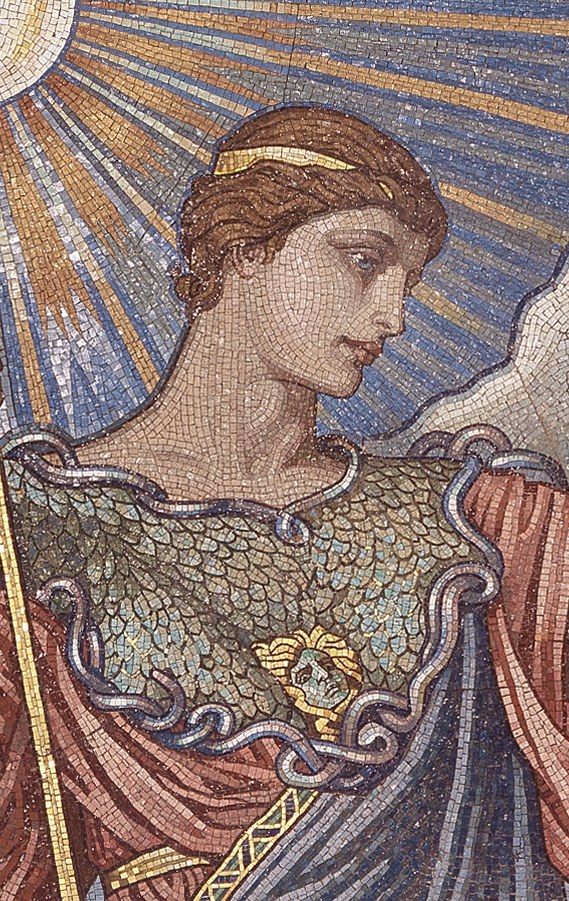
Minerva Revealed: Questions of Authority in a Digital World
While slowly working my way out of a candy coma, I came across an interesting article in the November edition of Wired titled, "Who is Minerva?" It's the story of the electronic rise and fall of Park Dae-Sung—Korea's most influential economic pundit until the government shut him down. A thirty-something freelancer with a telecom company in Korea, Park spent his days off in the library reading economics textbooks. At night, he logged in to play simulation games like Capitalism II. He was virtually invisible by all rights—just another cog in the machine. That is, until he decided to put his knowledge to work: In March 2008, he opened an account on a popular forum with the intention of blogging about economics, drawing on his research and public reports. It was only a matter of time before his pseudonym, Minerva, would become a household name.As Minerva, Park dealt out financial advice with authority and precision:
The world economy is in the midst of collapse, he warned, so pay your debts and stock up on noodles and drinkable water. He made pronouncements when to buy or sell a home, exchange Korean won for dollars, and pull out of the financial markets altogether.
As the financial markets around the world faltered, people began to pay attention. It didn't take long for his posts to attract attention, garnering hundreds of thousands of pageviews in addition to publicity from the press. He cemented his position as financial guru when he attacked a proposed plan by the Korean Development Bank to purchase a portion of Lehman Brothers in 2008. He maintained that the Lehman's debts were deadly and would cost the Korean people somewhere in the range of $80 billion. Lehman filed for bankruptcy a few short weeks later, and newspapers hailed him on "the Internet economic president." Park maintained later that all he did was analyze the data:
"I looked at the mortgage market in America, the oil market, the economic cycle, the circulation of capital. I analyzed all of these and determined the result."
He felt he was safe as Minerva. There was no published email address linked to the account—he could lay aside his mild manner and speak the "truth." He found a voice and it was one that commanded respect. This, of course, would not last.
The phone began to ring. "Would you like to speak to a journalist?" Park wasn't as anonymous as he would have liked to think despite the fact that he hadn't shared his secret with anyone: When he set up his account, he submitted his national ID and his telephone number, and he began to suspect that the information had been forwarded to the government. A bit panicked, he began the process of shutting down his blog. Posting one last time, he revealed a history and a warning, casting Minerva's as a "selfish financier" whose experiences should serve as a lesson to the people of Korea about the dangers of greed.
Two days later, he was arrested. He was held for 103 days—the government argued that he had cost Korea $2.2 billion by panicking thousands of citizens into selling off dollars. Park would eventually be acquitted of all charges, thanks in part to the testimony of an economics professor, Kim Tae-Dong:
"Minerva is a much better teacher than I am," Kim said later. "His writing is so easy for ordinary people to understand. I was surprised about his lack of a formal economics background."
While the judge agreed, Park's ordeal is far from over. The government can appeal and try him again. They have seized his computer and hard drive. The media lies in wait to plague him with questions—he must know where the real Minerva is. Friends shy away from contact with him.
Park has been completely stripped of his identity—both online and offline. He is no longer a cog, but the attention he attracts is reserved for those in exile. He is scorned and avoided because he interrupted the social order.
When Park lost his anonymity, he lost his credibility as well. Rather than accept that the ramblings of a self-educated freelancer were superior than their daily newspapers, most of the public wrote off the cult of Minerva as a fad. Daum's hardcore readership became consumed by conspiracy theories about the identity of the real Minerva, who must have set up Park through some Byzantine plot.
Park was able to use the Internet to author himself as an authority in economics. Internet identities are flexible—it's almost a bit like playing dress up: you can be anyone you like online. It began with customizable user names. Shy Samantha could suddenly be HotGrl28 and swear like a sailor and no one would the wiser of her shy nature. Or your highschool science teacher could be CycleDude65 online, reflecting his hidden biker interests from students while he droned on and on about sedimentary rocks and delta formations. With the growth of avatars, customization has become even more imaginative. Your avatar can bear a remarkable resemblance to you, or it can sport green skin and a cyclopian eye. Whatever the form, your virtual representation becomes your presence online. Repeated visits to a particular forum using a specific user name or avatar links you to this identity, and your actions through this identity generate your digital persona.
Park authored his digital authority in two ways: First his choice of the name Minerva inspired confidence. In borrowing Minerva's name, Park also appropriated her authority and reputation, which was confirmed when his predictions proved to be accurate. Second, he let his identity shape itself. He didn't offer any details about the real Park online. He didn't respond to comments left on his blog. He was simply a digital being—he projected a sense of omniscience and the readers of his blog granted him power by accepting his predictions and clamoring for more. The dialogue in creating an identity flows in both directions. The readers played a large part in shaping Minerva. But establishing yourself as an authority is not enough. You must demonstrate that you have a right to the knowledge. While there are any number of bloggers who post anonymously online because they could lose their jobs for their statements, when your posts affect the lives of millions, you need to have the right to share this information. In Park's case, his lack of an education worked against him—how could he have made such complex economic analyses without the benefit of a formal education? He surely could not have analyzed the data!
Who owns knowlege, and who has the right to distribute it? Cori Hayden explores these questions in When Nature Goes Public: The Making and Unmaking of Bioprospecting in Mexico. Hayden takes us to Mexico where we visit the Sonora Market and view stalls upon stalls of dried and fresh herbs purported to be the cures for various ailments (2003: 125). The marketplace and its inhabitants tell the story of a tradition of local medical practitioners who have served Mexico for generations: Maria Velasques, a vendor in Sonora, “has been tending the same stand for the past twenty years … she inherited the stand from her father, who was forced into an early retirement by the foot problems he accumulated after twenty-odd years of standing still [all day long]” (Hayden 2003: 139). These vendors are keepers of local knowlege regarding the uses of plants at their disposal. They gain this knowledge from their customers and from the various books that litter their stalls. However, ultimately, they are not the ones who manage this knowledge. In Hayden's text, it is apparent that pharmaceutical companies would rather that the global audience never knew about this simple marketplace where wonderous cures are to be found. They themselve do not view the knowledge of the vendors as legitimate:
Minerva's knowledge directly contradicted government intiatives. However, because MInerva's existence was mostly relegated to the digital world, Park was able to hold on to his authority in a way that Hayden's vendors could not. Park had the chance to reach hundreds of readers and share his knowledge—he could not be neatly contained and managed like the vendors. Nonetheless, the response of his readers to his true identity suggests that efforts to brand knowledge have been successful.
Can online identities be used to combat "ownership" of knowledge by sanctioned bodies? How does the Internet blur the question of subject-matter authority? Are anonymous sources more trustworthy than named sources—how does the digital public weigh these issues? The answers to these questions may have implications for the way we manage artifacts. Talk back below.
Cited:
Hayden, Cori.
2003 When Nature Goes Public: The Making and Unmaking of Bioprospecting in Mexico. Princeton: University Press.
“It does not make sense to treat vendors as sources of knowledge who deserve compensation: when you buy plants, you buy the information, and no further obligations are involved” (Hayden 2003: 134).This is a landscape that the drug companies would rather we not know about because it undermines the authority vested in them by the image of individuals in glasses and lab coats working fastidiously over their microscopes. The management of this knowledge is clearly manufactured to support a specific image. In Mexico the authority of knowing is constructed by the ideology that scientific knowledge of the large non-native pharmaceutical companies is superior to local knowledge.
Minerva's knowledge directly contradicted government intiatives. However, because MInerva's existence was mostly relegated to the digital world, Park was able to hold on to his authority in a way that Hayden's vendors could not. Park had the chance to reach hundreds of readers and share his knowledge—he could not be neatly contained and managed like the vendors. Nonetheless, the response of his readers to his true identity suggests that efforts to brand knowledge have been successful.
Can online identities be used to combat "ownership" of knowledge by sanctioned bodies? How does the Internet blur the question of subject-matter authority? Are anonymous sources more trustworthy than named sources—how does the digital public weigh these issues? The answers to these questions may have implications for the way we manage artifacts. Talk back below.
Cited:
Hayden, Cori.
2003 When Nature Goes Public: The Making and Unmaking of Bioprospecting in Mexico. Princeton: University Press.
Saturday, October 31, 2009
Don't Go In There!!! 10 Lessons From Our Favorite Horror Movies
Scary movies are fun. You're safe, after all. You may be snuggled on your sofa with the lights off, but the door is surely securely locked, and you know there's nothing hiding under the bed—and you've got enough ice cream to get you through whatever may come your way. If you're in a theater, well there's safety in numbers, isn't there? In scary movies, only foolish people who dare to wander about alone are ever targeted—and you would never go anywhere desolate alone, would you?
Scary movies can teach us important survival tips. (There's also a good, albeit typo-ridden, list here. But hey, in a horror movie no one really cares if you can spell. All that really matter is how fast you can run.) It's thanks to the careful studies of horror movies that we have emergency planning tips for surviving a zombie apocalypse. I, for one, am glad that these models have been mathematically tested and I suspect you probably are too—you wouldn't want to find out that your planning was for naught. It would kind of be like learning that the whole deal about garlic and vampires is a myth. Come to think of it, maybe some of the panic over H1N1 could be alleviated with this kind of planning and testing.
Well, being a social scientist, I had to add my own analysis to this growing body of literature. Here are 10 ethnographic lessons we can take away from our favorite horror movies:
(Special note: These are all rather old movies, but I do include some plot information, so proceed with caution. If you're concerned about spoilers, you may just want to read the bold text. Also given the huge number of remakes, its likely that you've seen a preview for an upcoming release based on a few of these, or you've seen them recently as a re-release.)
1. We all want to belong—it's not nice to make fun of others. In Carrie, the socially underdeveloped girl for whom the movie is named has a run-in with the resident school clique. The resulting anxiety causes Carrie to develop telekinetic abilities. The clique plots to get her to prom, and set her up with the clique leader's boyfriend. At prom, members of the clique manage to get Carrie elected prom queen. During her moment on stage, hardly daring to believe that she's been accepted by her classmates, the clique dumps a bucket of blood on her, and the crowd laughs. Big mistake. Carrie uses her telekinetic powers to punish the crowd in various ways. She finally seals the gym as an electrical fire breaks out, and returns home for a confrontation with her mother.
Carrie reminds us that high school can be a lonely time. It also marks the last stage of the "playground" where we learn socialization skills. No one wants to be excluded. No one wants to be the joke. People haven't yet fully realized their potential at this stage. So that geek in science class you made fun of but secretly copied off of during the midterms could go on to be successful as movie lore teaches us. So be nice. With this economy, you never know when you'll need a job.
2. The private domain, the household, is important to the proper socialization of individuals. The household is a very special place—it is where we learn the rules of our society, where we learn to navigate the social roles we will occupy as adults within the networks that make up social organization. The Halloween series shows us the dangers to the individual when the household fails to work as it should. [Image right: Abandoned house on Eastern Long Island.]
Michael's sister did not act to preserve the private domain. Her responsibility was to ensure that Michael had access to a childhood rite—trick or treating—which would have exposed him to social interactions with others. The result was that a little boy felt as though he did not belong the to the larger social order—he became a ruthless killer. (Think back to all the times you tortured a younger sibling, and be glad that things turned out okay.)
Interestingly, in the Rob Zombie remake of this movie, Michael's home life is actually fractured: his father is dead, his mom works as a stripper, and her boyfriend makes lewd comments to Michael's older sister. The explicit broken home metaphor sends the same message as the subtler messages in the original: home is important to shaping the individual, and if the home (i.e., the private) does not function as it should, the individual will never be cemented with society.
FYI: Michael is such a successful killer that he spawned his own survival guide and a rather cultish following.
3. Sleep is important to your physical and emotional well-being. The benefits of sleep have long been recognized by scientists: Sleep allows your body to recharge. Without sufficient sleep, memory, mood, and judgment suffers—we may even be more susceptible to illnesses. In A Nightmare on Elm Street, a group of teenagers are terrorized by a the ghost of a child serial killer named Freddie Kruger. The first hint that Kruger means business occurs when Tina Gray dreams she is being stalked by a figure with razors on its fingers. She wakes just as the figure catches her, finding that she has cuts where the figure grabbed her in her dream. She learns that her friends all had similar dreams. It is ultimately revealed that Kruger was prematurely released from prison due to an administrative error, and an irate public murdered him. He is now stalking the children of the people who killed him.
The teenagers cannot go to sleep for sleep resides in the realm in which Kruger is the most powerful, and yet without sleep, the characters appear to become increasingly hysterical. Kruger plays upon our need for sleep. We have to enter this vulnerable state. Nancy Thompson, the only remaining teen to escape Kruger's murderous onslaught, must reclaim the ability to sleep—and dream.
The Elm Street series blurs the line between the imaginary and reality. It reminds us that we need a balance of both to function as human beings.
4. Pay attention to erratic behavior— it generally signifies that something is very wrong. It's great to be passionate about something, but there is a fine line between passion and obsession. If a good friend of loved one begins to act obsessive or possession about a particular object, as Dennis did in Christine, get help for the person immediately.
Dennis is a fairly plain, but nice, teenager. He decides to use his money—against his parents wishes—to by a clunker. He lovingly restores the car, becoming increasingly possessive and jealous of anyone who expresses an interest in it. He loses all interest in anything but the car. He alienates his best friend and girlfriend, believing that they too want to take his beloved car away. This type of behavior signifies a break with society. Dennis needed help—though perhaps you also loved your first car and can sympathize.
5. Reserve judgment about people who spend extended amounts of time in costume. Why do we wear masks? To pretend to be someone else. Masks allow us to suspend responsibilities and bypass appropriate behaviors because when we are masked, we aren't ourselves. Clown makeup takes this further: because clown makeup is applied directly to the face, it transforms the individual instead of temporarily suspending the individual's own beliefs. With clown makeup, the individual becomes another entity entirely, not just an individual pretending to be something or someone else.
They likely evolved from court jesters. As a class, they elicit laughter and even encourage it. But can any group accept being the basis of the joke all the time? Perhaps if the humor were innocent, but there are mean-spirited people who enjoy derogatory humor. This presents the opportunity for jokers to turn the tables. Pennywise the Clown from It pretty much sums up the fear quotient of clowns—watch what you laugh at around them lest they think you are laughing at them instead of with them. [Image Right: Pennywise the Clown © Warner Bros. Television.]6. It's important to play with others. I've written before about the importance of the playground and free play to a child's social development. Having an overbearing, jealous, and abusive mother who will not let you socialize with others can be detrimental to your well-being as Norman Bates of Psycho can tell you. Bates' mother particularly demonized women, making it impossible for Bates to have a normal relationship with someone of the opposite sex. He ultimately kills his mother, but having had limited to no contact with the outside world and having had her run his life, he is incapable of living by himself and resurrects her via a dissociative personality disorder so she could continue to guide his actions. He was so wracked by guilt about even talking to women that he would be driven to kill them. Again, this is why it is so important that we all get a chance to spend some time in the sandbox—we need to learn how to navigate social situations and essentially run our own lives.
7. One day, Mother Nature is going to fight back. Fido may be humankind's best friend, but even Fido has a limit for how many times he'll fetch the paper. Movies like The Birds and Jaws suggests that if animals and fish ever decided to launch an orchestrated attach on the human species, we'd be royally screwed. We've evolved bigger brains, sure, but we've lost our "animal instincts." For all of our fancy technology, if all the birds in the world decided they were going to methodically dive bomb populations, we might find ourselves quickly isolated under a self-imposed quarantine. Sharks are built to be predators. Humans? Without the trappings of modern weaponry? Not so much. Really.
8. We need variation. Jack Torrence, a writer, takes a job as a caretaker for The Overlook Hotel in The Shining. He believes the off season, when the hotel is closed and snowed in, will be the prime opportunity to work on his book. The snow settles and Jack has a bout of writer's block, begins to drink, and starts to see things. The hotel's past begins to manifest. He fights with his wife, and is encouraged by the ghost of a former caretaker to "correct" his family. He sets out to murder them.
While Jack had a good idea, and sometimes getting away can help a writer, we need the spontaneity that accompanies human contact. The same routine day-in and day-out dulls the senses. You know, it's kind of like that job where you sat and stared at your computer screen blankly until 5 p.m.
According to one story concerning a family from Amityville, the DeFeos might have been better off if they had taken some time to learn about the land their house stood on. Ronald DeFeo Jr. was convicted of murdering his entire family in their beds because voices commanded that he do so. One explanation for the voices DeFeo heard comes from the allegation that the house was built on an Indian burial ground. In The Amityville Horror, which is supposed to be based on the true story of the DeFeo murders, if the Lutzes, who purchased the DeFeo's home after their untimely deaths, had done some more digging they would have thought twice about the bargain price they they were getting for the house. When paranormal events drive the Lutzes from their home, they are forced to abandon everything. See, the past can come back to haunt you. [Image Left: A babbling brook—legend has it that evil spirits will not cross running water.]FYI: Since the Amityville story is partly based on real events (though there is controversy surrounding the entire affair), there are many places on the web with information about the house and the paranormal activity that was supposed to have occurred there. This site gives an interesting overview if you want to learn more.
10. There are truths hidden in the strangest places. In The Gate, the lyrics to a rock song are actually the words to a spell that opens a portal to another world. The past survives in unusual ways, and sometimes history can be appropriated without fully understanding its context. But this is perhaps the most important "lesson" from this genre that anthropologists can take away: there are interesting histories still waiting to be uncovered—you have to open your eyes and be willing to think outside of the box. We are an inventive species. We recycle ideas (the amazing number of scary movie remakes I uncovered writing this post attests to this). And each time we reframe something we give it new meaning and life, creating another means of viewing our society. Folktales can be particularly enlightening in this regard.
Well, there you have it. I hope you've enjoyed this week's look at Halloween. In the coming weeks, we'll return to daily life. See you soon—I heard a noise I should probably check out.
Do you have a "lesson" you'd like to share? Or know of another "classic" scary movie that would help explain any of my lessons? Share below.
Technorati Tags: Halloween, 10 scary movies, horror, Michael Myers, The Shining, Carrie, It, Nightmare on Elm Street, The Gate, The Birds, Jaws, 10 lessons from scary movies, Pennywise, Freddie Kruger. Christine (movie), Psycho, Norman Bates, Amityville
Subscribe to:
Posts (Atom)


