Showing posts with label communication. Show all posts

Wednesday, June 29, 2011

Monday, June 13, 2011

Weinergate: Private Records in a Public Age


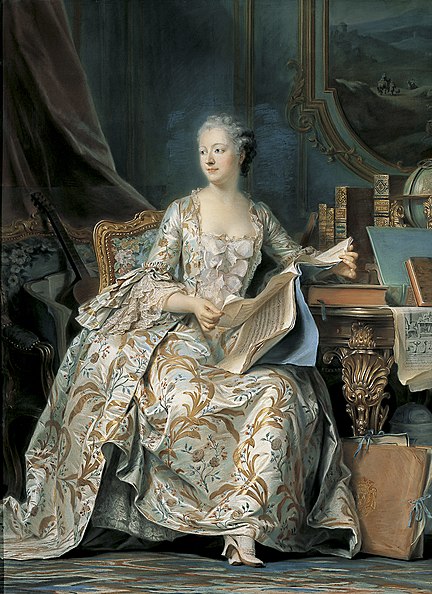
Marquise de Pompadour
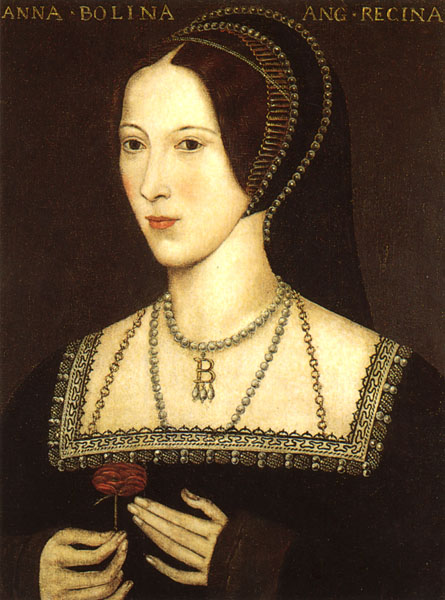
Anne Boleyn

You can find me over at the Scientific American guest blog today, where I tackle the moral outrage over Weinergate, and the role technology plays in judging these offenses. Here's an excerpt:
History is littered with private indiscretions made public—some have just been more public than others:
  • It is believed the Leonardo da Vinci was a passionate instructor to his students; one in particular remained in da Vinci’s favor for 26 years.
  • Cleopatra made no secret of the nature of her political alliances, which included a close friendship with the notable Marc Antony.
  • Alexander the Great’s conquests included two wives, a mistress, and possibly his life-long friend Hephaestion.
  • Catherine the Great masterfully orchestrated a series of lovers, one of whom may have had a hand in the death of her ill-fated husband, Peter.
  • Letters revealed that Franklin Delano Roosevelt got quite friendly with his wife’s social secretary Lucy Mercer.
Rep. Anthony Weiner (D) of New York, who tweeted and emailed photos of himself in various states of undress and arousal to several women, joins the ever-growing ranks of political figures whose extramarital pursuits have been made available for public scrutiny. However, unlike George Washington (a purported womanizer), Thomas Jefferson (who fathered several children by Sally Hemings), Warren Harding (had trysts in a White House closet), or even John F. Kennedy ("Happy Birthday, Mr. President"—though his relationship to Marilyn Monroe has never been confirmed), Weiner’s indiscretions will not be whispered about. Rather, he must contend with life lived in the age of media—where so many details of our lives, already public, can be collected and shared at the push of a button not just by newspersons but by regular folk too.

It is unlike anything anyone in his position has experienced before. The scandal that surrounded Bill Clinton doesn’t even come close, although the American public sat rapt as he proclaimed "I did not have sexual relations with that woman," and waited expectantly for the admission otherwise to come.

As an audience we’ve been here before. And yet, each time it happens, it seems to come as a surprise. We are at once irate and nonplussed. "How dare a person in power betray our trust?" we ask even as we turn a blind eye at the fissures in our own social circles. What’s the real reason behind our moral outrage? And what role does technology play in it?
 Read the rest here.

Tuesday, June 7, 2011

Wednesday, March 16, 2011

From the Archives: The Unglamorous Life of a Pay Phone

These days it seems that everyone has a cell phone. Most of us walk by public pay phones without a second glance in their direction. I definitely do—until Wednesday, when I stumbled upon a couple actually using a pay phone! Yes, they were likely tourists (I made that assumption based on their attire), but hey, it turns out that those ugly, dirty booths, kiosks, and stands actually do work. Well, sometimes. 

Tuesday, March 8, 2011

This Is Your Brain on Disney


Researchers have suggested that Disney generates a successful experience because our brains are responsive and receptive to art, creativity, storytelling, humor, wit, music, fantasy, and morality, all of which may have been important to social development—and feature heavily in the "Disney experience" in a rather amplified way.

Monday, February 14, 2011

Is a Kiss Ever Just a Kiss? Decoding the Art of Flirtation


Are there universals to flirting strategies? Does a lingering glance mean the same in all social-sexual encounters? So much of flirting is dependent on non-verbal cues: a glance, a touch, a seemingly casual movement—can these actions really be interpreted differently across cultures and contexts?

Tuesday, February 8, 2011

The Threads of Language and Identify


I can identify a New Yorker in conversation in a heartbeat. And it's likely that the rest of the country can as well. Residents of New York City and western Long Island (or Lung Guylan as I am apt to pronounce it—a good friend of mine from the Midwest once told me that I was the only person she knew who could produce such a hard /g/ in front of an /i/) speak a distinct dialect. The elements of the dialect contained within these statements are fairly recognizable thanks to the likes of Robert De Niro and Bugs Bunny. It is often parodied and often in the vein of the extremes apparent in the examples above, even though relatively few New Yorkers have such a hard stereotypical accent. It is also interpreted as aggressive and confrontational. Still, whether these elements are subtle and make appearances in moments of passionate debate or inebriation, or so pronounced as to make the speaker almost unintelligible, the New York dialect is a readily identifiable marker.

New Yorkers aren't forced to speak the way they do. But what if they were? What if New Yorkers had to drop their /r/s so that others could recognize them? How would their relationship to language change?

Tuesday, January 18, 2011

Do Men and Women Read Emotions Differently?


Appropriate social and emotional responses are often culturally driven, and produced to various degrees dependent on personality. Regardless of cultural association, some people, both male and female, seem more emotionally expressive and perceptive when compared to others—is there a biological explanation for this?

Possibly. But not in the way you would think.

Wednesday, December 22, 2010

Sharing to Communicate Is Here to Stay


The Pew Research Center's most recent internet study suggests that the popularity of blogging is shifting between generations: declining among Millenials and younger users, and increasing among Gen-Xers and older cohorts.

Monday, December 13, 2010

At a Loss for Words: Modern Lessons From a Lost Language


The back side of the Magdalena document shows
translations for numbers from Spanish to a lost language.
Photo by Jeffrey Quilter.

In a public-friendly article, Jeffrey Quilter and colleagues (2010) announced in September that they had uncovered a remarkable find at an archaeological dig in Northern Peru: It wasn't a funerary mask or ornate pottery or even a mummy, but a page. A letter actually, dating to 17th-century and detailing a minor trade event in the church complex where it was found. It is an interesting artifact by itself that could offer a glimpse into the life of the colonial community being uncovered. However, on the back of the letter someone had scribbled a number list in a previously unknown language, making the page more than just a record of church concerns. Though the list is short, it is enough to help researchers understand that they have in their hands the details of a number system that has not been previously recorded. As the researchers note, the history of the document itself—how and why it was created and then discarded—is tied to larger aspects of Peruvian history. And this history can help us understand the linguistic dynamics of cultural contact—which may be extended in some ways to the digital age.

Monday, December 6, 2010

The Evolutionary Roots of Talking With Our Hands


New Yorkers are hand talkers—we often use gestures to add emphasis to our conversations. Whether we're pointing to direct tourists, or waving to demonstrate our exasperation with traffic, drivers, or pedestrians, or trying to interject (New Yorkers don't interrupt!) we're gesticulating. We're not the only ones to do this, of course, but in my experience we do tend to employ this element of communication fairly frequently.

Wednesday, November 17, 2010

Wednesday, October 13, 2010

Seeking Authenticity in Facebook Profiles


We've heard the horror stories about the times when friending a supervisor went astray (seriously, Google Facebook fired—there's even a group!), and we're learning that HR is increasingly reviewing the social media profiles of applicants before they're even invited for an interview. Sites like Facebook allow users to craft a personalized image of themselves—does this personalization suggest a more authentic self? And if so, does that make Facebook a more desirable point of contact for a more "complete" view of a person?

Tuesday, September 21, 2010

The US Stamp Design Selection Process

Farming in the West stamp, 1898.
Credit: NYPL Digital Archives.

Following yesterday's post, and a comment about the use of the pronoun "we" in describing the significance of stamps in relation to our history, i did some digging on just exactly how images are selected for "stamphood." 

The short of it is this: The Citizen's Stamp Advisory Committee (CSAC) collects requests and suggestions from the public and makes recommendations to the Postmaster General, who appears to have a heavy hand in the designs that appear on stamps. 

Monday, September 20, 2010

The Mother Theresa Stamp and the Cultural Legacy of Postage

Unveiling of the Mother Theresa postage stamp Sept. 5th, 2010 at the National Shrine. Postmaster General Jack Potter was in attendance (immediately to the left of the stamp).

Over the recent Labor Day weekend, S and I visited Washington D.C. where purely by chance we stumbled on a stamp unveiling. We were touring the National Shrine—the mosaics are breathtaking—when we realized the ceremony occurring at the front had little to do with normal services.  The United States Post Office had a covered display at the front, so we wound our way up the side aisle and came across a placard announcing that a stamp for Mother Theresa was being issued. (This actually explained the large number of nuns present wearing her traditional white and blue sari.) So we found a spot along the wall and settled into to watch.

Tuesday, August 31, 2010

Don't Ma'am Me


Yesterday, I posted a link to an article from the Times on the nature of titles and the response of some women to being called ma’am. My female Twitter audience seemed to agree that they didn't really care for the title—though older females indicated that ma’am didn’t bother them as much. I have only been called ma’am once. I was definitely put off by it, but the sales clerk who did it had to be about fifteen, so perhaps I looked like a ma’am to her. (Still, yikes!) Ma’am is my mom, my aunts, my mother-in-law. Ma’am can now probably be applied to some teachers I had in school. My feeling is that I am not a ma’am. I might become one in the future, but for now that is not me.

Monday, August 30, 2010

Making Coffee Conversational Again: The Return of the Coffeehouse


The original coffeehouses were public gathering places. They were social spaces where people could argue politics, get and share news, and just generally enjoy each others' company. This trend persisted despite attempts to ban these meetinghouses and the caffeinated beverage that drew people together. Coffee—and caffeine—had us hooked on this type of downtime. But it wouldn’t last.

Tuesday, August 24, 2010

Hoarding Connections: The Boundaries of the Network


Facebook users are probably already familiar with the "People You May Know Feature" on Facebook which attempts to connect users to people whom they may, well, know based on degrees of connectivity. This feature has moved toward the bottom of the page and has been replaced by a "Friend Finder" feature which offers to search the user's email address book for potential missing contacts, but the idea remains the same: network saturation. These tools are meant to maximize the potential of our online networks, but are they really working?