Showing posts with label beliefs. Show all posts

Tuesday, May 17, 2011

The American Public's Fascination With the Undead


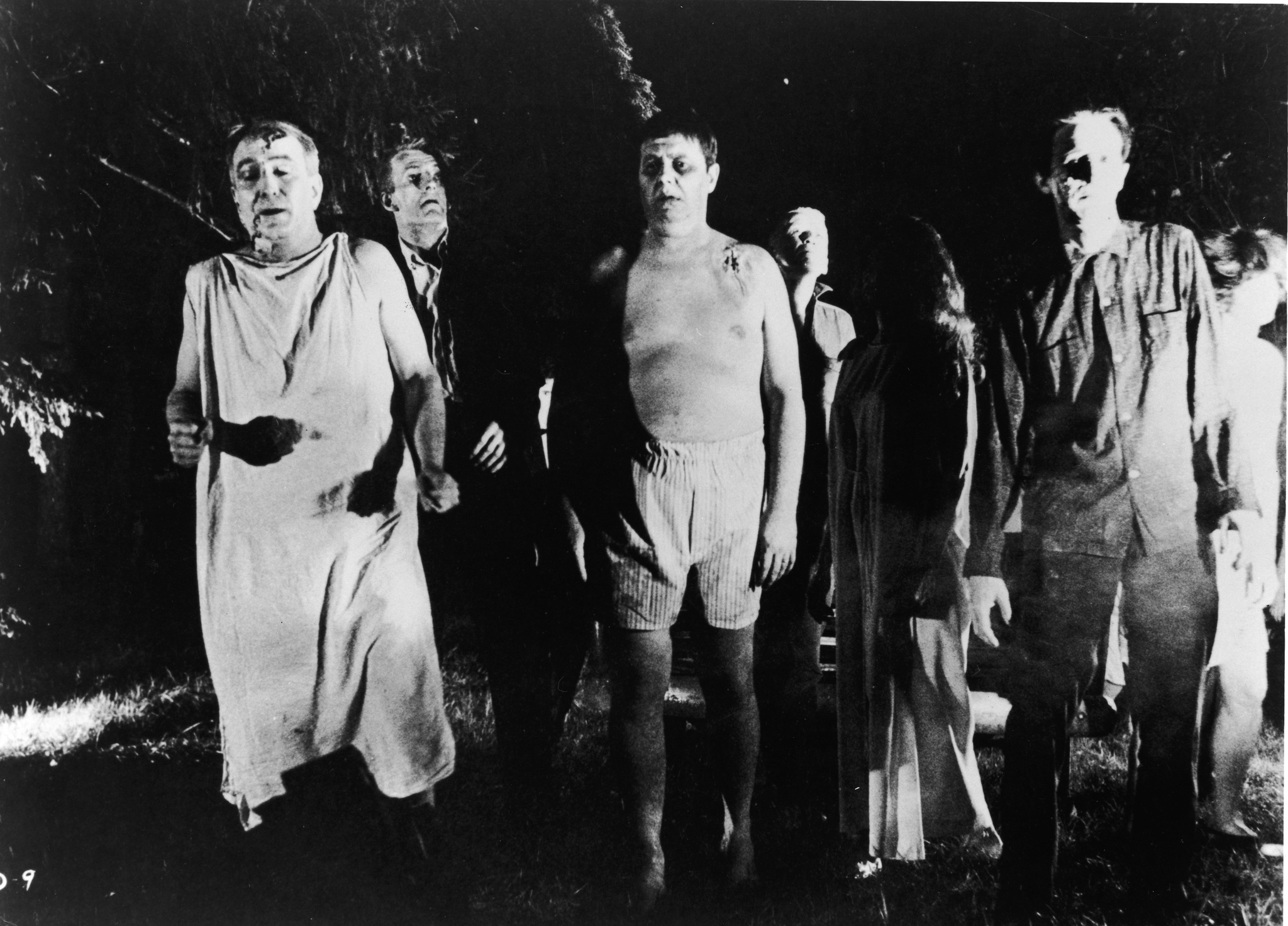
Zombies aren’t pretty creatures. Popular media depicts them in assorted states of decay. They shamble. They’re insatiable cannibals. And, well, they’re dead. So why can’t we get enough of them?

Wednesday, October 27, 2010

[Repost] Spitting on the Bat and Other Baseball Rituals


Baseball may be one of the few remaining bastions where superstitious beliefs and behaviors abound—and are actually encouraged. David Wright and his teammates on the New York Mets shaved their heads to break a slump last year, believing that a change and a show of solidarity would change the way their bats behaved.
Wade Boggs ate chicken before every game. John Smoltz did jumping jacks for almost half an hour once to keep a rally going for the Braves. And then there's the equipment: Players should talk to their bat, sleep with it, and never, ever loan it out. Players know that missing any one of these things could mean that the fate of the game—and the wrath of at least 40,000 screaming fans—could be on their shoulders. And that's only the beginning. There are tons of superstitious baseball beliefs like these.

Tuesday, January 19, 2010

To Lock or Not to Lock? Questions of Personal Security

Apparently, as unforgiving as New York City is reputed to be, a growing number of people have revealed that they don't bother to lock their front door, or only lock up on specific occasions. I couldn't pass on the opportunity to write about this because it reminded me of an early conversation with someone who is now one of my dearest friends.

It began when her house guest learned she didn't lock her front door when she was in her apartment. She nonchalantly confirmed that he was right, if she was home, she didn't see a reason to lock her door. If I remember the moment correctly, I believe it was in this instant that I looked at her as though she had grown giant green tentacles from her head. Radiating incredulity, I remember asking her, in a somewhat scandalized tone, whether she had heard of home invasions. At this point, she looked at me as though I had sprouted green tentacles from my head, and shrugged, noting that this was Chapel Hill, not at all like the Den of Iniquity I hailed from. Still, after much haranguing by me, the paranoid New Yorker, she started locking her door—at least when I was there with her.

When did the idea of personal safety become so, well, personal? Some of the folks reported not locking up because they live in a building with a doorman, which they feel is sufficient to prevent unauthorized persons from entering their homes. By leaving their doors unlocked, they're recreating a sense of "small town security." And it is this sense of security that others who don't have the benefit of doormen cite—they trust their neighbors. Their attitude has been characterized with the following thinking:
I am a free and easy person who is more concerned that my house is open to any friend who wants to drop by than with possessions. I live in a fine building in which people know and respect one another and there is no need to lock my door. I live in a building in which we are all good friends, and if someone who has a few too many drinks walks in by mistake one night and falls asleep on the couch, it’s a good story that proves what a friendly place this is.
While a sense of trust in your community and neighbors is a good thing—and in some ways helps to create your sense of "home"—this seems like a very fragile arrangement. Some in the article mention a loss of faith in theft deterrent measures as a reason for not locking up. Does this response seem a bit preemptive? It appears to run counter to the protection offered by the herd. If we're all locking our doors, then we're acting in concert to reduce opportunities for burglaries. One instance of not locking up, even if it's in a "closed system," compromises safety. The security cited by "No Lock People" is flawed—the doorman could step away from his post, or someone could leave the main door unlocked, or you could find yourself having to stay away from your apartment longer than expected, etc. Anything can happen. Of course, you could double and triple bolt your door, and still be the victim of a burglary. But why make things easier for a would-be thief?

The comments have been interesting to review. They represent a varied view of personal safety—former city dwellers who never locked up are bolting their doors in the suburbs, and No Lock People who have always lived outside of urban areas talk about how they have never felt threatened, didn't feel threatened until they were robbed, or changed their minds after being verbally accosted about locking up. One commenter shared the following:
"I shared a house with a no-lock person in grad school. She would leave the back door unlocked all the time. I asked her politely to lock up and she said 'I prefer to trust people'. I could never make her understand that it was unreasonable for her to put my possessions at risk as well."
People have a right to determine their own measures of safety, but not at the expense of others. Personal safety is therefore a much more public issue than one may initially think. Yes, we want laws in place to protect us. But personal safety is also dependent on the things we do to support those laws. Personal safety is tied to public behaviors:
"The no lock people say that a determined burglar will get in whether the doors are locked or not, which is true, but I would say most burglars are not that determined! They're opportunists, rattling doorknobs, looking for the fool who hasn't locked up so they can make a quick and easy buck. We mistakenly left our car doors unlocked a couple of years ago when someone was going up and down the street breaking into cars. He/she wasn't breaking windows or using crowbars, they were just testing door handles. The $60 he took didn't matter as much as the sense of security that evaporated after the break-in. I can only imagine how I'd feel if it had been the house. Anyone who wants into my house needs to get past at least two locks now, and if I'm inside, that's only the start of his troubles."
It's an interesting way to think about the relationships we develop with our surroundings. Are you a Lock or No-Lock person? Me? I'm (mostly) a locker, even though I live in a fairly safe neighborhood, I think you just never know. When I briefly lived in North Carolina, I could never forget that I was a woman living alone, and was an aggressive locker. I don't think I ever allowed myself to relax there. I had a roommate and I don't think I ever trusted her with my safety. Much to my surprise, when I returned to New York, I found I was guilty of leaving the back door unlocked on occasion when I knew that I would be coming "right back." It surprised me. Recent events have caused me to double check when I leave the house to make sure I've locked up, even if I'm coming "right back." But I wonder if I might revert over time. I want to trust my neighborhood, as I'm sure many other people do, but does it make sense to do so when so much is dependent on the actions and desires of others?


Tuesday, November 10, 2009

Negotiating Private Beliefs and Public Behavior With the Meter Running

Last week was a relatively busy one. While the Yankees were being paraded down Broadway and Mayor Bloomberg was holding on determinately for a chance at another term in office, regular people were contending with the social order. Last week Paul Bruno and his partner, Erick Ruales, were ejected from a New York City cab because they were engaged in public displays of affection in the backseat. Bruno and his partner allegedly "sat close," possibly hugging (maybe they shared a kiss), which the driver, Medhat Mohamed, found distracting and felt compromised his ability to get them to their destination. Mohamed was ultimately concerned that their snuggling was a precursor to sex, and two blocks into the ride, demanded that they exit the cab. Bruno and Ruales were appalled at their treatment and have filed a complaint against the driver. The Taxi and Limousine Commission is currently investigating. If Mohamed is found guilty of a "service refusal," he could be fined. According to the Post (which has surprisingly provided in-depth coverage of the story—the newspaper has a reputation for tabloid-quality writing), "the first offense is a $200 to $350 fine, the second a $350 to $500 fine and a 30-day suspension, and the third strike is license revocation." [Image Right: Paul Bruno, Credit NY Post.]

While the Village Voice has wryly noted that being kicked out of a cab is a mark of a true New Yorker, in a city whose history is steeped in diversity, tolerance is a city standard—and in an interesting twist is seemingly being preached on behalf of both sides: The public response has provided support for both Bruno and Ruales, and Mohamed as well. The cabbie's supporters state that he has a right to a work environment where he is both safe and comfortable. And he does. However, he is also a service provider. He is not a city worker, but he engages the public on a regular basis. It is his livelihood. In his line of work, his job is take people—provided they don't present a threat to his well-being and can pay the fare—from Point A to Point B. Of course he has to right to ensure that his personal safety is not compromised—but at what point do such decisions come to be regarded as profiling? Is he given a set criteria against which to measure safety? Hardly, because the issue of personal safety is not a concrete measure. The line separating these types of decisions is a fine one, open to personal beliefs, which is not a fair measure for either party.

In Minnesota, Muslim cab drivers objected to transporting passengers who had been drinking or who were carrying alcohol, such as wine, from the Minneapolis-St. Paul International Airport because it violated the terms of their religion. According to one driver,
"The one who drinks, the one who transports, and the one who makes a business of it, they have the same category."
These drivers argued that transporting passengers who have been drinking or who are carrying alcohol violated their religious freedom. And they are right. However, like Mohamed, they have entered a profession that requires them to work with all members of the public. As a result, the Minnesotan cab drivers have also faced investigations for service refusal, although the Metropolitan Airport Commission is working with them to mediate the situation. They suggested that cabbies who would not transport passengers carrying alcohol install lights on their roofs to indicate their non-alcohol stipulation, but this policy met a poor reception. For now, cabbies must move to the back of the queue, which could mean another three hour wait between fares. This is an industry that relies on people's need to travel when they themselves are unable to to provide the transportation. In New York City, inebriated party-goers are encouraged to take advantage of mass transit options, which includes cabs, to protect both themselves and other motorists from drunk driving accidents. Is there room here for this type of negotiation?

People get kicked out of cabs all the time, for being disorderly, for getting sick, and for getting too frisky in the backseat. But Bruno and Mohamed have raised issues of discrimination and religious beliefs. The medallion holder for Mohamed's cab has stated that according to Islam, displays of affection between same-sex couples are unacceptable. To avoid penalties and possibly losing his license, Mohamed has has to prove that his discomfort was not caused by the sexual orientation of his passengers, that he would have accorded a straight couple with the same treatment. Mayor Bloomberg has denounced the cab driver (with the politician's disclaimer that he does so only if the story is as stated) saying that
"Somebody's orientation has absolutely nothing to do with whether they can ride a taxi. That kind of attitude doesn't fit with what this city's become."
Is there room for Mohamed's religious argument? In discussing this case with someone, he argued time and time again that despite the civil right issues, Mohamed is an independent operator, and like other businesses, he has a right to determine how he will do business and with whom. But in a business that has such a broad reach, is this argument justifiable? When working with the public, where does the line between personal beliefs get drawn? PDA's are everywhere. People hold hands on the street, they may kiss at the bar, and I won't get into what I've seen happen on the subway. If there is to be a standard for public behavior, then it needs to be explicitly stated and enforced—and not by a New York City cab driver, whose sole responsibility is to get his fares to their destination quickly and safely.  But beyond questions of public decency and disorderly conduct, which are fairly subjective judgments, how can such a standard be set? The law states with regard to public decency and disturbing the peace that persons whose behavior
endangers the public peace or health or which openly outrages public decency for which no other punishment is expressly prescribed by this code, is guilty of a misdemeanor.
In other words, there is no concrete measure—anything found offensive can be filed under this heading. Did Bruno and Ruales endanger the public peace? Did they openly outrage public decency? Are they guilty of a misdemeanor? On whose measure are they to be judged? Did Mohamed endanger public peace or outrage public decency? There is clearly a lot of room here for interpretation. And the interpretation can be colored by personal biases. Is this a case of personal belief coloring business practices? Talk back below. [Image Left: Medhat Mohamed. Credit James Messerschmidt, NY Post.]

Friday, October 30, 2009

Did You Spit on That Bat? Rituals and Superstitions in Baseball

Update: The opening day Citi Field video appears to have been removed. I have replaced the video with a link, and included a photo in the event that video also gets pulled by MLB.

The crack of the bat, the smell of sausage and peppers, and the vendor's cries of "Beer here!" and "Pretzels!" will soon be nothing more than distant echoes—the ghosts of a season past. American baseball fans are saying their final farewell to summer with the Fall Classic. Just as spring training marks the coming of long, lazy summer days eating hot dogs and pretzels, yelling at the umpires, and singing "Take Me Out to the Ballgame," October ball means hot chocolate and gloves, jackets, and blankets (though there is still considerable yelling at the umpires and booing the opposing team). At the end of the Classic, once a champion is declared, the non-contenders lick their wounds and turn their thoughts to the next year. The fans begin to dream of spring. Until that point, however, baseball is littered with small rituals and superstitions meant to appease whatever gods are watching, and more importantly, the fans. If you do happen to tune in to watch this year's contenders, pay attention to the guy on the mound. If he's pitching a good game, take note of whether any of his teammates talk to him. And try and see if anyone steps on the foul line. And when the camera pans to the dugout, note whether the guys seem to sit in the same place. In the stands, check out whether the fans have signs and how they're wearing their hats when their team is down.

Baseball may be one of the few remaining bastions where superstitious beliefs and behaviors abound—and are actually encouraged. David Wright and his teammates on the New York Mets shaved their heads to break a slump, believing that a change and a show of solidarity would change the way their bats behaved. Wade Boggs ate chicken before every game. John Smoltz did jumping jacks for almost half an hour once to keep a rally going for the Braves. And then there's the equipment: Players should talk to their bat, sleep with it, and never, ever loan it to another player. And they should also remember to spit in their hand before picking it up. Baseball players know that missing any one of these things could mean that the fate of the game—and the wrath of at least 40,000 screaming fans—could be on their shoulders. And that's only the beginning. There are tons of superstitious baseball beliefs like these.

Whole teams can be cursed, like the White Sox. Though the most famous curse probably relates to one of the biggest rivalries in the sport—the Red Sox and the Yankees. The Curse of the Bambino was invoked when the Red Sox sold famed pitcher and right fielder, Babe Ruth, to the Yankees in 1919. Up until that point, the Red Sox had been fierce contenders in the sport—they'd won five World Series championships, including the first title in 1903. After selling Ruth, it would be 86 years before they'd win another. In 1920, during his first year with the Yankees, Ruth hit 59 home runs—more than any team that season. He led the Yankees to seven AL pennants, and four World Series championships. From 1920 to 2003, the Yankees would win 39 AL pennants, and 26 World Series titles. The Red Sox struggled. The championship always seemed to be just beyond their reach, and a vicious rivalry grew between the two teams. They tried in vain to lift the curse, which was finally broken with the help of a bloody sock—but not before Bill Buckner let a ball through his legs in 1986 to name the Mets the World Series champs. In 2004, the Yankees and the Red Sox faced off in October. The Yankees won the first three games of the World Series. Then, in a startling upset, the Sox managed to win the next four games straight, thanks in part to Curt Schilling's willingness to pitch through an injury. [Image Above: Bill Buckner 1986 © Sports Illustrated.]

The Sox got off lucky—the Cubs are still trying to shake the Curse of the Billy Goat. And recent seasons (and really, some not so recent seasons) have Mets fans asking whether the team is cursed too. Is it the Curse of Doc Gooden? One fan has gone so far as to propose the Curse of the Cat, claiming the new Citi Field has been cursed by the cat that ran across the field during the opening game at the new ballpark (see video here). When the new Yankee stadium was being constructed, Red Sox sympathizers tried to curse on the Yankees by burying a Red Sox jersey in the foundation. Despite initially laughing at the claim, Yankee officials ordered workers to break through two feet of cement to remove the offensive garment. [Image Right: Cat streaks across field during opening day at Citi Field. Credit: Mary Altaffer/AP.]

What causes otherwise rational people to succumb to superstitions in sporting situations?

Superstitions are found in every culture. We often first encounter them as children. They are the first set of "rules" about our world that we learn—an attempt perhaps to try and exert some control over our lives. For example, these are two that you are probably familiar with:
You must hold your breath while going past a cemetery or you will breathe in the spirit of someone who has recently died.
Don't step on a crack on a sidewalk or walkway. (Step on a crack/break your mother's back.)
As children our lives are mostly managed by our caregivers, so there's a small sense  of satisfaction in knowing that because you held your breath as you passed a cemetery, you—as small as you are—were able to thwart an evil spirit or prevent an injury to your mother.

As adults, we're faced with the realization (and frustration) that there still things that are beyond our control. We want to know. We need explanations. While modern technology and science have provided many answers, superstitious beliefs still persist because they offer a sense of control—and a connection. While you may not believe breaking a mirror will bring you seven years bad luck, you're unlikely to go out of your way to smash mirrors intentionally—or walk under a ladder, for that matter. You believe that in not breaking a mirror, you've done nothing to draw bad luck and so any misfortune that comes your way, can't be your fault. And if your neighbor believes he shouldn't break a mirror, then we're back to the herd mentality—the idea that we can be protected if enough people follow suit. A belief in superstitions connects us to others. If we all believe (or kinda believe) that breaking a mirror brings bad luck, then we're all less likely to break mirrors. We are consciously careful with this fragile glass. Over time, the superstition may fade, but not before a pattern of behavior emerges (i.e., don't break mirrors because the shard could cut someone).

With 40,000+ people watching anxiously as batters try to hit a tiny, fast moving ball if they don't exert some sort of control over the situation, there'll be a backlash—no matter how good they are. So they tap the plate, draw a line in the batter's box, fix their gloves, etc. They're showing their fans that they're ready—it's not their fault if they miss.  Their decisions are under the collective scrutiny of fans who view them as their representatives in the competition. NY Mets fans have not quite forgiven Carlos Beltran for not swinging the bat, which ended the Mets' run in 2006. These superstitious rituals give the players a sense of control over the unknown, but it also protects them. [Image Left: Carlos Delgado, NYM, gets ready to bat.]

And it connects them to the fans. In every national sport, the athletes are an extension of the populace.
An athlete who represented his people and won, conferred a distinction upon the people and the city as his victory testified to the caliber of the citizens; accordingly, upon his return, they would break down a part of the wall for him to enter through because “a city which could produce such citizens had no need of walls to defend it” (James 1963: 154).
We are linked by a belief in them—no matter how poorly they perform, we have chosen them as our representatives. And our alliance to a team allow us to distinguish between each other as Mets fans and Yankee fans and Philly fans, and White Sox fans and Cubs fans can all tell you. It grants us an identity—it confers respectability. The Tomahawk Chop, and singing Sweet Caroline and Lazy Mary are rituals that unite us. They also confer an expectation that the team will win. After all, the fans are wearing their protective charms—jerseys, hats, and even sneakers—they carry signs, and bring brooms when necessary. All the players have to do is spit on the bat, tap the plate, and remember to swing. [Image Left: Crowd at Shea 2008.]

Seventh inning stretch at Shea Stadium, 2008. Fans sing "Take Me Out to the Ballgame" and "Lazy Maria."
Losses hurt that much more because of charms and superstitions.. Superstitious practices are meant to shield against these while passing the loss onto circumstances beyond anyone's control. If a team loses even after the rally caps have been put on, then it isn't for want of trying. To enter a ballpark is to believe that belief is enough. NY Mets fans know this—it's their motto: "Ya gotta believe." The ballpark remains the last fortress of sheer belief, where the energy of the screaming masses can guide a bat true and steady. Maybe there is a little magic left in the world after all. You can only catch glimpses of it from April to October, and for some it is brighter than for others but it's there—wherever there are fans, and pitchers, batters, fielders, and catchers to perform the rituals that defy logic. When the game is on the line, the power of the crowd encompasses the staunchest critic. We're one force, and its our respectability on the line. And superstitions don't seem quite so silly. [Image Bottom Right: NY Mets Fans with signs at Shea Stadium, 2008.]

Do you throw salt over your shoulder? Knock on wood? Wear your team colors on your socks when they're playoff contenders? Let us know below!

Cited:
James, C.L.R.
1963 Beyond a Boundary. New York: Pantheon Books.