Tuesday, November 10, 2009

Negotiating Private Beliefs and Public Behavior With the Meter Running

Last week was a relatively busy one. While the Yankees were being paraded down Broadway and Mayor Bloomberg was holding on determinately for a chance at another term in office, regular people were contending with the social order. Last week Paul Bruno and his partner, Erick Ruales, were ejected from a New York City cab because they were engaged in public displays of affection in the backseat. Bruno and his partner allegedly "sat close," possibly hugging (maybe they shared a kiss), which the driver, Medhat Mohamed, found distracting and felt compromised his ability to get them to their destination. Mohamed was ultimately concerned that their snuggling was a precursor to sex, and two blocks into the ride, demanded that they exit the cab. Bruno and Ruales were appalled at their treatment and have filed a complaint against the driver. The Taxi and Limousine Commission is currently investigating. If Mohamed is found guilty of a "service refusal," he could be fined. According to the Post (which has surprisingly provided in-depth coverage of the story—the newspaper has a reputation for tabloid-quality writing), "the first offense is a $200 to $350 fine, the second a $350 to $500 fine and a 30-day suspension, and the third strike is license revocation." [Image Right: Paul Bruno, Credit NY Post.]

While the Village Voice has wryly noted that being kicked out of a cab is a mark of a true New Yorker, in a city whose history is steeped in diversity, tolerance is a city standard—and in an interesting twist is seemingly being preached on behalf of both sides: The public response has provided support for both Bruno and Ruales, and Mohamed as well. The cabbie's supporters state that he has a right to a work environment where he is both safe and comfortable. And he does. However, he is also a service provider. He is not a city worker, but he engages the public on a regular basis. It is his livelihood. In his line of work, his job is take people—provided they don't present a threat to his well-being and can pay the fare—from Point A to Point B. Of course he has to right to ensure that his personal safety is not compromised—but at what point do such decisions come to be regarded as profiling? Is he given a set criteria against which to measure safety? Hardly, because the issue of personal safety is not a concrete measure. The line separating these types of decisions is a fine one, open to personal beliefs, which is not a fair measure for either party.

In Minnesota, Muslim cab drivers objected to transporting passengers who had been drinking or who were carrying alcohol, such as wine, from the Minneapolis-St. Paul International Airport because it violated the terms of their religion. According to one driver,
"The one who drinks, the one who transports, and the one who makes a business of it, they have the same category."
These drivers argued that transporting passengers who have been drinking or who are carrying alcohol violated their religious freedom. And they are right. However, like Mohamed, they have entered a profession that requires them to work with all members of the public. As a result, the Minnesotan cab drivers have also faced investigations for service refusal, although the Metropolitan Airport Commission is working with them to mediate the situation. They suggested that cabbies who would not transport passengers carrying alcohol install lights on their roofs to indicate their non-alcohol stipulation, but this policy met a poor reception. For now, cabbies must move to the back of the queue, which could mean another three hour wait between fares. This is an industry that relies on people's need to travel when they themselves are unable to to provide the transportation. In New York City, inebriated party-goers are encouraged to take advantage of mass transit options, which includes cabs, to protect both themselves and other motorists from drunk driving accidents. Is there room here for this type of negotiation?

People get kicked out of cabs all the time, for being disorderly, for getting sick, and for getting too frisky in the backseat. But Bruno and Mohamed have raised issues of discrimination and religious beliefs. The medallion holder for Mohamed's cab has stated that according to Islam, displays of affection between same-sex couples are unacceptable. To avoid penalties and possibly losing his license, Mohamed has has to prove that his discomfort was not caused by the sexual orientation of his passengers, that he would have accorded a straight couple with the same treatment. Mayor Bloomberg has denounced the cab driver (with the politician's disclaimer that he does so only if the story is as stated) saying that
"Somebody's orientation has absolutely nothing to do with whether they can ride a taxi. That kind of attitude doesn't fit with what this city's become."
Is there room for Mohamed's religious argument? In discussing this case with someone, he argued time and time again that despite the civil right issues, Mohamed is an independent operator, and like other businesses, he has a right to determine how he will do business and with whom. But in a business that has such a broad reach, is this argument justifiable? When working with the public, where does the line between personal beliefs get drawn? PDA's are everywhere. People hold hands on the street, they may kiss at the bar, and I won't get into what I've seen happen on the subway. If there is to be a standard for public behavior, then it needs to be explicitly stated and enforced—and not by a New York City cab driver, whose sole responsibility is to get his fares to their destination quickly and safely.  But beyond questions of public decency and disorderly conduct, which are fairly subjective judgments, how can such a standard be set? The law states with regard to public decency and disturbing the peace that persons whose behavior
endangers the public peace or health or which openly outrages public decency for which no other punishment is expressly prescribed by this code, is guilty of a misdemeanor.
In other words, there is no concrete measure—anything found offensive can be filed under this heading. Did Bruno and Ruales endanger the public peace? Did they openly outrage public decency? Are they guilty of a misdemeanor? On whose measure are they to be judged? Did Mohamed endanger public peace or outrage public decency? There is clearly a lot of room here for interpretation. And the interpretation can be colored by personal biases. Is this a case of personal belief coloring business practices? Talk back below. [Image Left: Medhat Mohamed. Credit James Messerschmidt, NY Post.]

Monday, November 9, 2009

Culture in Action 3: Parades—Public Festivals, Public Spectacles

Whether you care or not, if you live in the United States, you undoubtedly know by now that the New York Yankees won their 27th World Series title. As part of the winning tradition, the players and relevant staff were honored with a ticker tape parade on Friday, Nov. 6th, down the Canyon of Heroes (also known as Broadway when it isn't packed with screaming sports fans). The parade wound its way down to City Hall, where recently re-elected Mayor Bloomberg presented the team with the keys to the city.

Parades are held to mark a celebration. They're a form of public festival that draws in the community, and actually work to reestablish social ties: The idea is that we are all gathered to celebrate the same accomplishment—we are united in our celebration. Parade-goers are linked by their sense of pride and camaraderie. In a larger sense, parades are also a spectacle. It's a chance for a community to put on a show for their neighbors, to demonstrate their dominance. The accomplishment being celebrated connects the people present, but it also distinguishes them from others as well. And there is a great deal of preparation that goes into the show—from transit to safety to entrepreneurship to turning a blind eye when employees go missing for a few hours, everyone has a part to play. The spectacle is supported by the government because it provides a momentum that can be used. If buildings need to be built, laws need to be passed, or even wars need to be started, the momentum from such public celebrations can be mobilized. This sense of pride can carry forth many political agendas. [Image Left: A vendor sets up an impromtu stall on Nassau Street using a permanent sidewalk ornament.]

Ethnographers should always try to understand their biases, and their audiences should also have a sense of how the objectivity of information may be compromised. So before I go on, I need to confess that I considered calling this post "Infiltrating Enemy Territory." I am not a Yankees fan, as some of you may have surmised. I root for that other New York team, whose name I will not mention in a post about a parade for their rivals. I put a lot of though into whether this parade should be filed under the Culture in Action series, and ultimately decided that parades have a huge cultural element to them: they can reveal a great deal about the character and personality of a people through the ways in which society responds to these occasions. Regardless of the cause, a parade is still a chance to think about and talk about crowd dynamics. So as a dedicated anthropologist (who works within the vicinity of the parade route), I elbowed my way into enemy camp on Friday morning, bore witness to the scene, and extricated myself when chants of "Boston Sucks!" began to rise in pitch and intensity (belatedly realizing that I was wearing a red jacket—the color associated with the Yankees' arch rivals, the Boston Red Sox, and the team they beat for the championship, the Philadephia Phillies).

A coworker taking the PATH trainThe day began early for many fans. A great many people called in late or played hooky entirely, and teachers may have noticed a few empty desks on Friday morning. My morning commute was slightly more hectic than usual, as I contended with the large number of fans boarding the LIRR and subway. (which operates in a system similar to the LIRR) shared his morning commute with a dog who alternated between wandering the aisle and hopping up on the seat much to the annoyance of the conductor. Food vendors selling breakfast staples were doing brisk business as I made my way to my office building, weaving between the droves of people trying to get to Broadway.The came from all directions, of different sizes, shapes, and colors, all sporting the navy blue of their team. And there to greet them were the opportunistic street vendors who saw an chance to make a quick and relatively easy profit: banners and hats were $5.00, t-shirts cost $10.00. [Image Right: A dog ready for the Yankees' celebration downtown. Credit: J. DiBenedetto]

At about a quarter to eleven, I slipped into my jacket, grabbed my camera and hurried west on Wall Street. Several small groups—families with young children in tow—passed me, emitting triumphant whoops of joy. We all soon encountered a road block that could have ended all parade activities right then: Wall Street was closed at William Street, a good two blocks from Broadway. The police were blocking off street perpendicular to Broadway as they filled with people, and given the high profile of Wall Street itself, extra precautions were being taken to preserve the landmark. A cop advised us to walk north, so we walked a block to Pine Street, passing some more vendors, and turned west again to pack together as closely as we could to get a glimpse of the parade route. I ultimately wound up approximately half a block away from Broadway and still could only just see the events ahead of me. People got creative in searching for a good spot. Some climbed on the shoulders and backs of accommodating friends, boyfriends, and parents. Others climbed on top of city vehicles, though they were quickly chased off by watchful police. Some scaled buildings. Many buildings downtown have ledges about eight feet or so above the ground. They aren't wide, but if you're nimble, you can perch there to get above the crowd. And still others hung out of office windows.

[Above: Fans find a good vantage point.]

The crowd seemed to feed off of the growing energy. Laughter would erupt, and in true Yankees fan form, chants of "Boston Sucks!" and "Phillies Suck!" and "Let's Go Yankees!" and "Twen-ty Sev-en"—the hyphens emphasize the musical intonation of that particular chant—would swell periodically. It was definitely something to feel: a sea of people packed into side streets in shoulder to shoulder formation, speaking as one and thinking as one (except for the impostor in the red jacket). We were momentarily transported back to the stadium. The chants were something that everyone could participate in, including those who had not made it to a side street before the police began barricading those as well. But in truth, even those at the very end of the blocks and the people behind the barricades didn't seem upset that they couldn't see their beloved team. They were content to stand there, to be a part of the crowd, and take up their favorite war cries.

[Above: Crowd packed into Pine Street awaiting the parade.]

"Ticker tape" (really just shredded paper), thrown from buildings, drifted through the clear blue sky. In no time at all, the ground was covered, and everyone standing in the vicinity had scraps of paper in their hair and on their jackets. Ticker tape parades are unique to urban settings. They originated (where else?) in New York City. The first parade of this kind occured in 1886, when ticker tape was thrown during the dedication of the Statue of Liberty. The tape came from the old stock ticker machines, and when they were replaced by their electronic cousins, the ticker tape that filled the sky for these parades came from shredded office waste paper and city-supplied confetti. Caught in the wind, the scraps drifted for miles, blanketing Wall Street and the neighborhood. Lumbering street sweeping vehicles were on standby to get things back to order once the ceremonies wrapped up. [Image Left: "ticker tape" fills the sky.]

So there I was, in my red jacket, standing amongst a throng of people who probably would have fed me to the lions in the Colosseum had they known of my true loyalties. A cheer began to grow from the right along Broadway, cameras were thrust into the air around me, and the band marched by. Not to be dissuaded, the crowd continued to roar, their cries growing louder as the official photographers made their way down the Canyon. And then finally, They came. The moment these people had been waiting for arrived, and the crowd erupted, extending to the peripheries. In fact, those were the folks who probably yelled the loudest. Children were hoisted into the air. Hats were waved. A woman began to cry. [Image Right: Exuberant young fan tries to catch ticker tape. He did wind up snagging several large white sheets of copy paper.]

Remember when I said that athletes are our representatives on a public stage? We support teams because we believe in them—we trust them to protect our interests on the national stage. Well, the parade-goers turned out to say "Thank you." That was the feeling that seemed to radiate through the crowd. Yes, there was a bit of arrogance, but a certain amount of swagger is to be expected from the victorious—particularly when it is cultivated, and believe me, New Yorkers cultivate their swagger. People were there to say thank you. The spectacle was in the showing. The turnout was meant to send a clear message to rivals, and perhaps the strength of voices behind the cheers and the chants were meant to carry—I wonder if the hair on the backs of the necks of Bostonians and Philadelphians stood on end at that moment. Could the energy from this group have been so great as to travel that distance? [Image Left: The team passes this section of the crowd.]

Once the team passed, people began to trickle away from Broadway. Some were going back to their offices, like me, and others were headed to City Hall for the final celebration, and still others were packing into bars and joining lines to buy hot dogs and chicken with rice from food vendors. The mood was jubilant. Vendors were still hawking their wares as I made my way back toward Wall Street, fighting the crowd heading in the direction of City Hall. But the day was not over for many. Those who did not have tickets to the City Hall ceremony seemed content to mill about and drink in the remaining atmosphere. [Image Right: People moving toward City Hall.]

The effects of this public festival/spectacle will last well beyond the coming baseball season. The city's spirit has been renewed by this gathering of fans—even though they don't represent the complete spectrum of baseball supporters in New York. The festival/spectacle has permitted the assertion of a sense of social dominance and it will be something that all residents—whether you support this team or not—will carry forth with them in their travels. Our reputation, whether we want to share in it or not, has been bolstered. Once again, we are a city united, albeit some more reluctantly than others. The parade created a substantial expense for the city, which probably saw a tab in the range of $330,000.00, but the long term effects appear to outweigh these costs.  


[Above: Debris post-parade.]

Have you witnessed a parade or village festival on a smaller scale? Perhaps in your town or village? What was the atmosphere like? Let's talk about it below while we wait for Spring Training 2010.

Friday, November 6, 2009

Fido Speaks: In the Grip of the Anthropomorphized Pet

When you were a kid, did you have or want a pet? What about now?

I have a fairly full pet history. I am a sometimes reluctant co-owner/parent of two cats, one regal and sedate, Blink, and the other playful and slightly odd, Blaise—I adore them but it's hard to be enthusiastic when you come home to cat vomit because the younger one decided to eat all the dry food you left out to exert her dominance. I'm also an aunt of sorts to a cocker spaniel (he belongs to my brother-in-law); since I am responsible for his name, Frodo, I figure that grants me some degree of parentage, though as a cat person I tend to find him smelly and clumsy. (In hindsight, I would have suggested Maximus or Lucky if I'd known anyone would take me seriously. Really, I was just thinking aloud. And I secretly call him Maximus anyway, which is probably why he's confused.) And as a child, I've also had a pair of rabbits (my parents gave them away), the requisite childhood goldfish (I nearly overfed them), a stray dog I named Kit (yes, after the talking car in Knight Rider), and assorted parakeets thrown into the mix (in truth, these have always been more my father's pets than mine). No rocks, though. [Image Right: Frodo, the fearless cocker spaniel.]

If you have a similar list, we're not alone. According to the ASPCA, 60% of all households in the U.S. have at least one pet. The Humane Society reports that in 2008, there were approximately 75 million dogs as pets, and 88 million cats as pets (including my own two terrors).There's no question that pets occupy a special place in our lives—they have clothing lines, their own products, they even have a care industry (e.g., pet sitters, doggy day care, walkers, doggy valium, etc). The Internet is littered with videos of pets doing funny things, like the kittens who thought they would hitch a ride on a Roomba.

Humans have been keeping pets for as long as they have been able to support them. The earliest pets—dogs and cats, descendants of wolves and large wild cats—were probably domesticated for work (protection, hunting, etc) and grew into partnerships with their owners over time so that their descendents enjoyed greater status within the household. An article in November's National Geographic describes the honor awarded to royal egyptian pets: they were often interred with their owners, along with mummified food and playthings.  I had the good fortune of seeing the Hapi-men mummy last summer at the University of Pennsylvania Museum of Archaeology and Anthropology (see image below). He was buried with a mummified terrier—dogs may want to reconsider the whole idea of "man's best friend" and what that entails. But it seems that Egyptians kept a variety of pets, from assorted birds to crocodiles to lizards.


[Image: Hapi-Men mummy.]
 
Animal mummies were once cast aside, children sold nice specimens to tourists but the bulk of these findings were turned into fertilizer—until anthropologists and archaeologists realized that a lot could be learned about life in ancient Egyptian times from these mummies. For example, they can reveal which animals were sacred, such as the bull and the crocodile. They can tell us about votive offerings, and they can tell us about the mummy industry itself, which was in full swing by 664 B.C. As is common with any popular commercial trade, it was soon infiltrated by less than savory characters:
(C)orruption crept into the assembly line, and the occasional pilgrim ended up with something dodgy ... x-rays have revealed a variety of ancient consumer rip-offs: a cheaper animal substituted for a rarer, more expensive one; bones or feathers in place of a whole animal; beautiful wrappings around nothing but mud.
But perhaps there is something to be learned from our current relationships with our furry, finned, and feathered friends as well. What becomes clear in reading about mummified animals is that they were cast with anthropomorphic properties—that is, they were accorded human characteristics. We can say this because we know that cults grew around certain animals, and they were believed to be connected or representative of certain gods. For example, crocodiles were associated with Sobek, a water god of fertility; falcons were connected to Horus, a sky god and protector of the living king; and dogs were linked to the jackal-headed Anubis, guardian of the dead. The Apis Bull was revered as a representation of the all powerful king. Apis bulls were treated to special sanctuaries and elaborate funeral rites. [Image Right: Animal mummy.]

We don't quite worship our pets in this way, but we definitely do think of them in anthropomorphic terms. Blink likes to cuddle under the blanket. Is she emulating her owners who pull the covers up to their chins when they're ready for a nap? Blaise likes to settle near my books. Is she reading them when I go to bed? And on more than one occasion, they've parked themselves in front of the television. Are they watching and understanding the way we do? [Image Left: Blink under the blanket.]

Anthropomorphism is perhaps deeply rooted in our social nature. When we began to domesticate animals, the easiest way for us to understand them would have been to contextualize them in terms of what we knew best—ourselves. Attributing human characteristics to our pets links us to them: they are firmly in our control, but we are equally in their power. Because they have human elements to them, we are obligated to care for them.  Anthropomorphism has been explained as early attempts to understand the world, to link the divine with the natural, but perhaps there is a simple need for companionship in the equation as well. In a world still full of mysteries, is it any wonder that we tried to root ourselves firmly in that world by tying it to ourselves in this way?

And just as an industry grew around mummified pets, so too has an industry grown around our own. If pets have human characteristics, then of course, they must mirror their humans in other ways and they must need things, providing opportunities for padded profit margins. As Egyptian priests would sell votive mummies at higher prices to parishioners who looked like they could pay more, so too are unnecessary products peddled with earnest. And we believe we need to provide jewel studded collars and elaborate pet homes and carriers because we have to fulfill our obligations to our pets. In humanizing our pets, we have become captives to a certain degree. [Image Right: Blaise watches television.]

It is clear from both a historical and modern perspective that our pets are here to stay. The question is how far will we go to integrate them into our lives? Pet cemetaries are already fairly commonplace. Are these interments any different from pet mummies? Some pets can go to school to learn to be more petlike, a quality that we define and manage. The drive to humanize seems to march onward, but toward what end?

Share your pet stories below.

Thursday, November 5, 2009

The Passing Of Claude Levi-Strauss—The Mytheme Will Live On

This being a blog concerned with anthropology, I would perhaps be remiss not to note the passing of the inimitable French anthropologist, Claude Levi-Strauss. When I posted his obituary on my Facebook page, a friend commented, wondering how many people who saw the headline thought, "Wow, the guy who makes the jeans died." But perhaps that number is less than my skeptical friend and I initially believed. Anyone who has taken an introductory anthropology course has been exposed to Levi-Strauss—as have students in linguistics, sociology, and philosophy. The man had a broad reach.

I won't wax poetic about him, not when there are countless others writing odes (here and here) and tuning lyres, but there is no doubt that he has been immensely influential to my development as an anthropologist. The mytheme—a unit of meaning in a myth, an essence, that remains unchanged and when combined with other such units of meaning reveal the overall message/lesson of the myth itself—has walked every step with me while I explored identities and essences. The concept provides core elements that figure prominently in the ways I have come to think about and understand "society." And perhaps this is only fitting since he is a part of my academic genealogy. As an undergrad, my advisor had us create academic genealogies for prominent anthropologists, listing their teachers, colleagues, and students as well as the institutions where they worked. The purpose of this exercise was to emphasize the trickle of ideas—how we as students become connected to these minds because our professors are connected to them, having been their students or students of students. Levi-Strauss escaped the German invasion of France during WWII and settled in New York to teach at my alma mater, the New School for Social Research, placing him directly in my genealogy.

He was undoubtedly a man of his time, and his writing today may seem archaic and offensive, but I still place him in my genealogy proudly. He recognized that we are shaped by our cultural histories, but retain a sameness that makes us all human. He believed that sameness was rooted in language:
“Language is a form of human reason, which has its internal logic of which man knows nothing.”
As our language is shaped by the growth of digital media, as the ways we think are shaped by digital media, I hope that Levi-Strauss' mythemes will continue to guide me in understanding the effects of these changes, and provide a way to continue to bind us together as humans.

Claude Lévi-Strauss, anthropologist, born November 28, 1908; died October 30, 2009.

Tuesday, November 3, 2009

Minerva Revealed: Questions of Authority in a Digital World

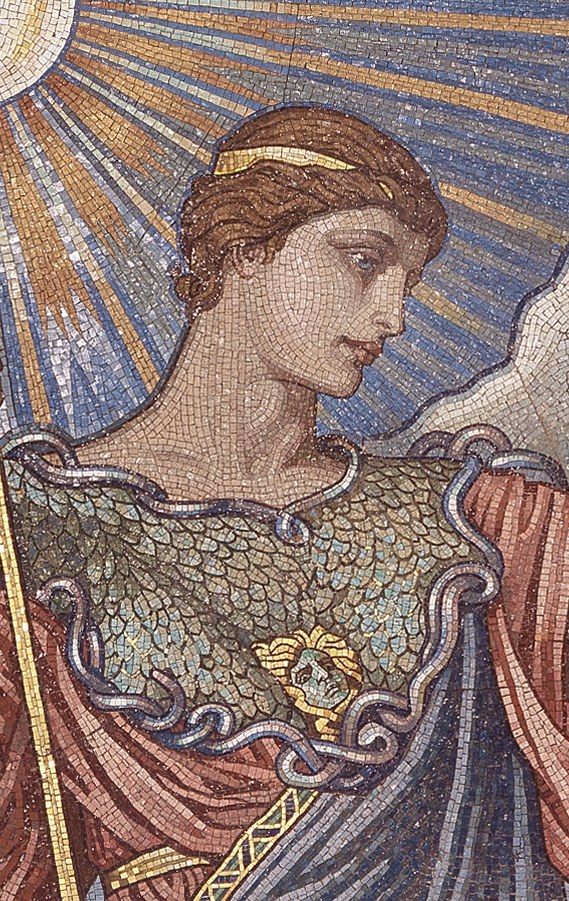
MinervaWhile slowly working my way out of a candy coma, I came across an interesting article in the November edition of Wired titled, "Who is Minerva?" It's the story of the electronic rise and fall of Park Dae-Sung—Korea's most influential economic pundit until the government shut him down. A thirty-something freelancer with a telecom company in Korea, Park spent his days off in the library reading economics textbooks. At night, he logged in to play simulation games like Capitalism II. He was virtually invisible by all rights—just another cog in the machine. That is, until he decided to put his knowledge to work: In March 2008, he opened an account on a popular forum with the intention of blogging about economics, drawing on his research and public reports. It was only a matter of time before his pseudonym, Minerva, would  become a household name.
As Minerva, Park dealt out financial advice with authority and precision:
The world economy is in the midst of collapse, he warned, so pay your debts and stock up on noodles and drinkable water. He made pronouncements when to buy or sell a home, exchange Korean won for dollars, and pull out of the financial markets altogether.
As the financial markets around the world faltered, people began to pay attention. It didn't take long for his posts to attract attention, garnering hundreds of thousands of pageviews in addition to publicity from the press. He cemented his position as financial guru when he attacked a proposed plan by the Korean Development Bank to purchase a portion of Lehman Brothers in 2008. He maintained that the Lehman's debts were deadly and would cost the Korean people somewhere in the range of $80 billion. Lehman filed for bankruptcy a few short weeks later, and newspapers hailed him on "the Internet economic president." Park maintained later that all he did was analyze the data:
"I looked at the mortgage market in America, the oil market, the economic cycle, the circulation of capital. I analyzed all of these and determined the result."
He felt he was safe as Minerva. There was no published email address linked to the account—he could lay aside his mild manner and speak the "truth." He found a voice and it was one that commanded respect. This, of course, would not last.

The phone began to ring. "Would you like to speak to a journalist?" Park wasn't as anonymous as he would have liked to think despite the fact that he hadn't shared his secret with anyone: When he set up his account, he submitted his national ID and his telephone number, and he began to suspect that the information had been forwarded to the government. A bit panicked, he began the process of shutting down his blog. Posting one last time, he revealed a history and a warning, casting Minerva's as a "selfish financier" whose experiences should serve as a lesson to the people of Korea about the dangers of greed.

Two days later, he was arrested. He was held for 103 days—the government argued that he had cost Korea $2.2 billion by panicking thousands of citizens into selling off dollars. Park would eventually be acquitted of all charges, thanks in part to the testimony of an economics professor, Kim Tae-Dong:
"Minerva is a much better teacher than I am," Kim said later. "His writing is so easy for ordinary people to understand. I was surprised about his lack of a formal economics background."
While the judge agreed, Park's ordeal is far from over. The government can appeal and try him again. They have seized his computer and hard drive. The media lies in wait to plague him with questions—he must know where the real Minerva is. Friends shy away from contact with him.

Park has been completely stripped of his identity—both online and offline. He is no longer a cog, but the attention he attracts is reserved for those in exile. He is scorned and avoided because he interrupted the social order.
When Park lost his anonymity, he lost his credibility as well. Rather than accept that the ramblings of a self-educated freelancer were superior than their daily newspapers, most of the public wrote off the cult of Minerva as a fad. Daum's hardcore readership became consumed by conspiracy theories about the identity of the real Minerva, who must have set up Park through some Byzantine plot.
Park was able to use the Internet to author himself as an authority in economics. Internet identities are flexible—it's almost a bit like playing dress up: you can be anyone you like online. It began with customizable user names. Shy Samantha could suddenly be HotGrl28 and swear like a sailor and no one would the wiser of her shy nature. Or your highschool science teacher could be CycleDude65 online, reflecting his hidden biker interests from students while he droned on and on about sedimentary rocks and delta formations. With the growth of avatars, customization has become even more imaginative. Your avatar can bear a remarkable resemblance to you, or it can sport green skin and a cyclopian eye. Whatever the form, your virtual representation becomes your presence online. Repeated visits to a particular forum using a specific user name or avatar links you to this identity, and your actions through this identity generate your digital persona.

Park authored his digital authority in two ways: First his choice of the name Minerva inspired confidence. In borrowing Minerva's name, Park also appropriated her authority and reputation, which was confirmed when his predictions proved to be accurate. Second, he let his identity shape itself. He didn't offer any details about the real Park online. He didn't respond to comments left on his blog. He was simply a digital being—he projected a sense of omniscience and the readers of his blog granted him power by accepting his predictions and clamoring for more. The dialogue in creating an identity flows in both directions. The readers played a large part in shaping Minerva. But establishing yourself as an authority is not enough. You must demonstrate that you have a right to the knowledge. While there are any number of bloggers who post anonymously online because they could lose their jobs for their statements, when your posts affect the lives of millions, you need to have the right to share this information. In Park's case, his lack of an education worked against him—how could he have made such complex economic analyses without the benefit of a formal education? He surely could not have analyzed the data!

Who owns knowlege, and who has the right to distribute it? Cori Hayden explores these questions in When Nature Goes Public: The Making and Unmaking of Bioprospecting in Mexico. Hayden takes us to Mexico where we visit the Sonora Market and view stalls upon stalls of dried and fresh herbs purported to be the cures for various ailments (2003: 125). The marketplace and its inhabitants tell the story of a tradition of local medical practitioners who have served Mexico for generations: Maria Velasques, a vendor in Sonora, “has been tending the same stand for the past twenty years … she inherited the stand from her father, who was forced into an early retirement by the foot problems he accumulated after twenty-odd years of standing still [all day long]” (Hayden 2003: 139). These vendors are keepers of local knowlege regarding the uses of plants at their disposal. They gain this knowledge from their customers and from the various books that litter their stalls. However, ultimately, they are not the ones who manage this knowledge.  In Hayden's text, it is apparent that pharmaceutical companies would rather that the global audience never knew about this simple marketplace where wonderous cures are to be found. They themselve do not view the knowledge of the vendors as legitimate:
“It does not make sense to treat vendors as sources of knowledge who deserve compensation: when you buy plants, you buy the information, and no further obligations are involved” (Hayden 2003: 134).
This is a landscape that the drug companies would rather we not know about because it undermines the authority vested in them by the image of individuals in glasses and lab coats working fastidiously over their microscopes. The management of this knowledge is clearly manufactured to support a specific image. In Mexico the authority of knowing is constructed by the ideology that scientific knowledge of the large non-native pharmaceutical companies is superior to local knowledge.

Minerva's knowledge directly contradicted government intiatives. However, because MInerva's existence was mostly relegated to the digital world, Park was able to hold on to his authority in a way that Hayden's vendors could not. Park had the chance to reach hundreds of readers and share his knowledge—he could not be neatly contained and managed like the vendors. Nonetheless, the response of his readers to his true identity suggests that efforts to brand knowledge have been successful.

Can online identities be used to combat "ownership" of knowledge by sanctioned bodies? How does the Internet blur the question of subject-matter authority? Are anonymous sources more trustworthy than named sources—how does the digital public weigh these issues? The answers to these questions may have implications for the way we manage artifacts. Talk back below.


Cited:

Hayden, Cori.
2003  When Nature Goes Public: The Making and Unmaking of Bioprospecting in Mexico. Princeton: University Press.