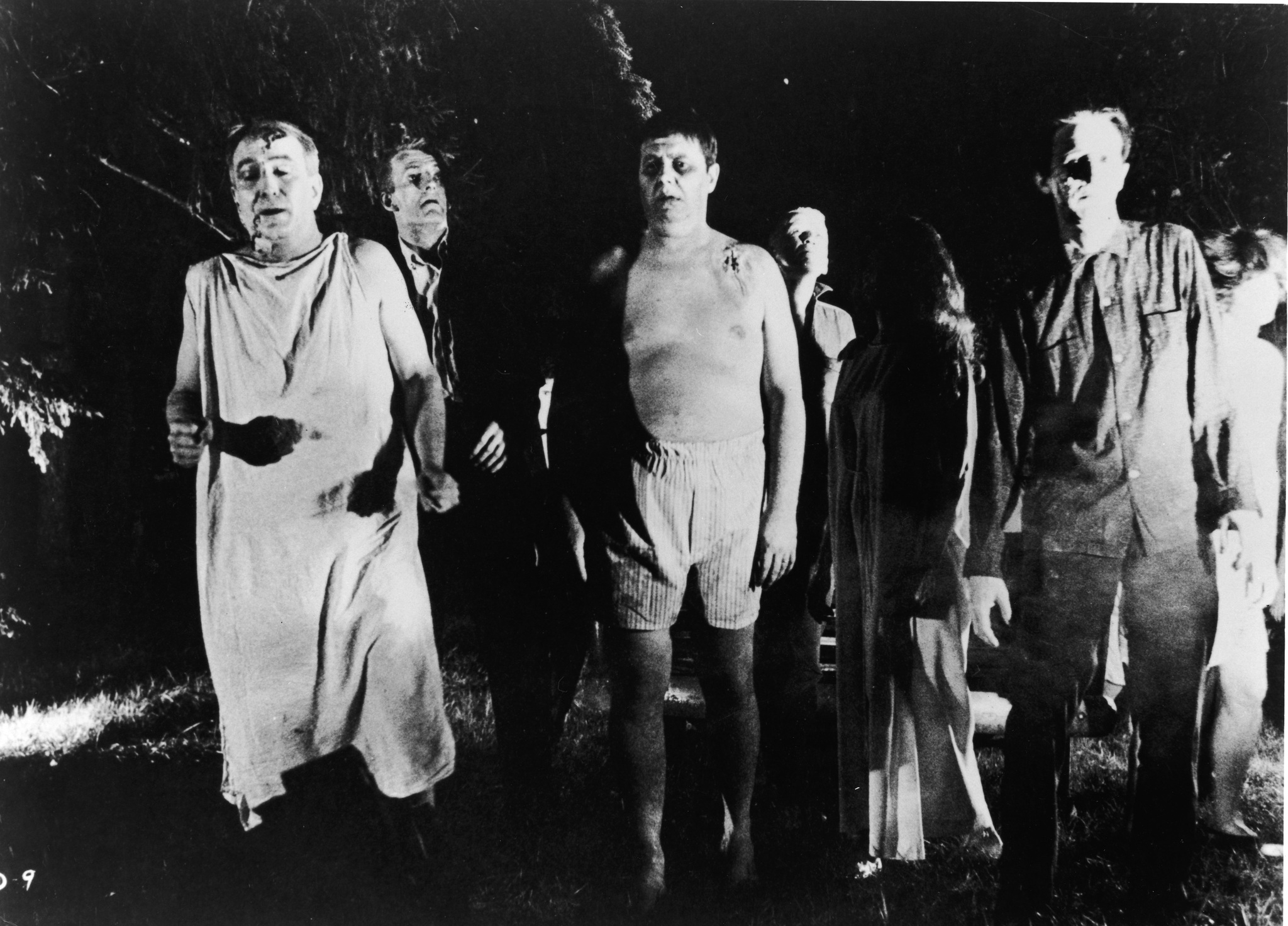
Zombies aren’t pretty creatures. Popular media depicts them in assorted states of decay. They shamble. They’re insatiable cannibals. And, well, they’re dead. So why can’t we get enough of them?


 Does your town or city have an annual tree lighting ceremony?
 While public trees are also reminders of the holiday season, and contribute to the festive atmosphere, it is perhaps this likely forgotten aspect of the tree tradition helps it appeal to both secular and non-secular holiday participants—thereby making community trees appropriate/acceptable public symbols. Or does it? This symbolism is probably not known to most people, who may view the Christmas tree tradition as inherent to Christianity—and it has come to have strong connections to the Christian faith. Are public trees a nuisance to persons of other faiths? Or has this particular image become so mainstream that it is accepted without much additional thought? For the trees on this page, the tourists streamed by without giving them much notice. And the tree in Rockefeller Center is more of a general attraction than an icon in the traditional sense. [Image Left: The South Street Seaport Tree, Dec. 09.]
 Though Diwali and Hanukkah may be two of the more well-known festivals of light, religions and cultures around the world have have long observed festivals in the meant to drive away the imagery and meaning associated with the colder, longer days that mark the end of the growing season. Both figuratively and literally, on the darkest of days, people wish for light. As the days grow shorter and sometimes colder, and the earth stands barren until growth can begin anew, people's thoughts turn to warmth, life, and light. Light drives away the darkness. It symbolizes hope and beginnings, knowledge and safety. According to History.com,
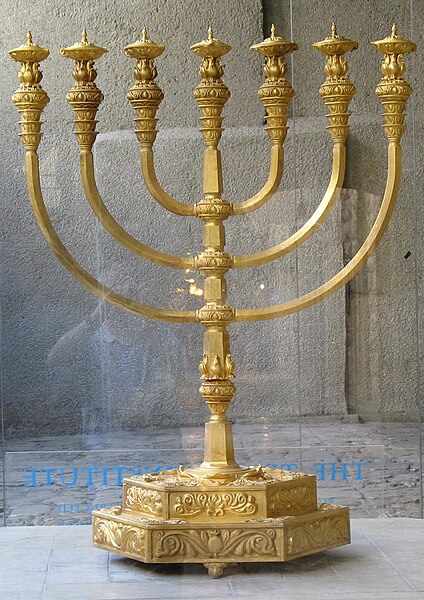 festivals of light often occurred at the end of December because it marked the end of the agricultural season: livestock was slaughtered so that they would not have to fed in the coming cold months (and provided a supply of fresh meat that may have been scarce throughout the year), the last of the harvests were been brought in bringing a reprieve from field labor, and beer and wine had likely finished fermenting. [Image Above Right: Diyas lit for Diwali © Photofurl. | Image Bottom Left: Menorah.]

 Bruno and his partner allegedly "sat close," possibly hugging (maybe they shared a kiss), which the driver, Medhat Mohamed, found distracting and felt compromised his ability to get them to their destination. Mohamed was ultimately concerned that their snuggling was a precursor to sex, and two blocks into the ride, demanded that they exit the cab. Bruno and Ruales were appalled at their treatment and have filed a complaint against the driver. The Taxi and Limousine Commission is currently investigating. If Mohamed is found guilty of a "service refusal," he could be fined. According to the Post (which has surprisingly provided in-depth coverage of the story—the newspaper has a reputation for tabloid-quality writing), "the first offense is a $200 to $350 fine, the second a $350 to $500 fine and a 30-day suspension, and the third strike is license revocation." [Image Right: Paul Bruno, Credit NY Post.]
"The one who drinks, the one who transports, and the one who makes a business of it, they have the same category."
"Somebody's orientation has absolutely nothing to do with whether they can ride a taxi. That kind of attitude doesn't fit with what this city's become."
 When working with the public, where does the line between personal beliefs get drawn? PDA's are everywhere. People hold hands on the street, they may kiss at the bar, and I won't get into what I've seen happen on the subway. If there is to be a standard for public behavior, then it needs to be explicitly stated and enforced—and not by a New York City cab driver, whose sole responsibility is to get his fares to their destination quickly and safely. But beyond questions of public decency and disorderly conduct, which are fairly subjective judgments, how can such a standard be set? The law states with regard to public decency and disturbing the peace that persons whose behavior
 endangers the public peace or health or which openly outrages public decency for which no other punishment is expressly prescribed by this code, is guilty of a misdemeanor.

 lands that the Celts occupied, the two traditions merged. However, the rise of Christianity did not permit the worship of nature spirits. A concerted effort began to erase Samhain, which stood as a symbol of paganism. The conversion of Constantine helped this cause, but missionaries found it difficult to carry out his orders, so they devised a plan to modify paganism to mask Christian beliefs. In the 8th century, Pope Gregory III turned Samhain into All Saints Day—a day to honor the saints who did not have a special day already. The eve of All Saints Day, All Hallows Day, became the day in which the practices of Samhain were observed. The "evening of Hallows" ultimately became Halloween. [Image: A modern day ghost.]
 We have woven these elements together to create our own particular brand of Halloween. People add their own touches to the holiday all the time. In this way, Halloween can belong to all of us and still hold its mystique. Its survival despite the church's attempts to sanitize and edit it as a festival and observance is something that many immigrant groups can relate to—whether they do so consciously or not. And in some ways, its survival represents the American ideal: that you can come here, from anywhere, and live free of persecution and be accepted. This is an idea that many Americans hold to be sacred—though not many may know that a supposed spooky tradition embodies this ideal.
