Does your town or city have an annual tree lighting ceremony?
In New York City, the Rockefeller Center Christmas tree tradition appears to have been inadvertently started by construction workers who placed a tree at the site in 1931. The National Tree has been a tradition since 1923. But it seems likely that the practice of erecting community trees predates any sanctioned event. [Image Right: The Stock Exchange Tree. Dec. 09.]
Trees have become an important aspect of the holiday season. This year, I've been largely successful at saving my Christmas tree from the destructive forces that are my cats. I don't really blame them for thinking that the large green thing is there for their climbing amusement, but I am almost always disappointed when I find that they made cat-sized holes in different parts of the tree. The tree is important to my commemoration of the holiday. It provides the focal point in my home for the festivities, and reminds me of festive childhood celebrations.
This history of the Christmas tree is connected to our discussion on light. As the days grew shorter and the landscape bare, special significance was tied to evergreen bushes and trees, which displayed a perceived resilience against anti-growing conditions. While public trees are also reminders of the holiday season, and contribute to the festive atmosphere, it is perhaps this likely forgotten aspect of the tree tradition helps it appeal to both secular and non-secular holiday participants—thereby making community trees appropriate/acceptable public symbols. Or does it? This symbolism is probably not known to most people, who may view the Christmas tree tradition as inherent to Christianity—and it has come to have strong connections to the Christian faith. Are public trees a nuisance to persons of other faiths? Or has this particular image become so mainstream that it is accepted without much additional thought? For the trees on this page, the tourists streamed by without giving them much notice. And the tree in Rockefeller Center is more of a general attraction than an icon in the traditional sense. [Image Left: The South Street Seaport Tree, Dec. 09.]
 While public trees are also reminders of the holiday season, and contribute to the festive atmosphere, it is perhaps this likely forgotten aspect of the tree tradition helps it appeal to both secular and non-secular holiday participants—thereby making community trees appropriate/acceptable public symbols. Or does it? This symbolism is probably not known to most people, who may view the Christmas tree tradition as inherent to Christianity—and it has come to have strong connections to the Christian faith. Are public trees a nuisance to persons of other faiths? Or has this particular image become so mainstream that it is accepted without much additional thought? For the trees on this page, the tourists streamed by without giving them much notice. And the tree in Rockefeller Center is more of a general attraction than an icon in the traditional sense. [Image Left: The South Street Seaport Tree, Dec. 09.]
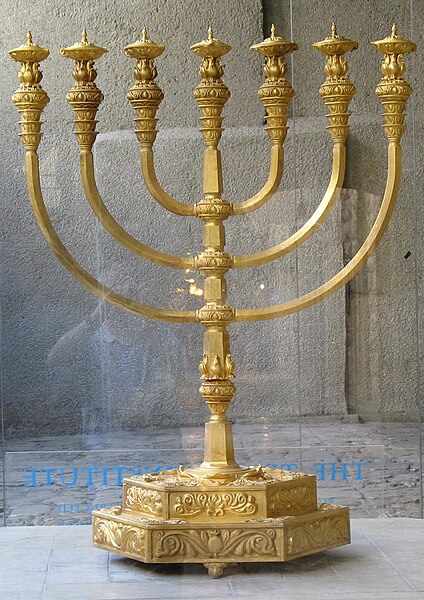
However, though many people might pass Christmas trees without giving them much notice, some certainly noticed the menorah standing at an entrance to the Fort Greene Park and questioned whether it was a violation of church and state since it stands on government land. The Chabad that sponsored the display actually obtained a permit from the park to do so, and park officials maintain that one Christmas tree and one Menorah are permitted to be displayed—if someone applies to sponsor it. The initial responses to the post have called for tolerance with religious symbols.
It is acceptable to display physical representations of the holiday season? Share your thoughts on public symbols of the holidays below.